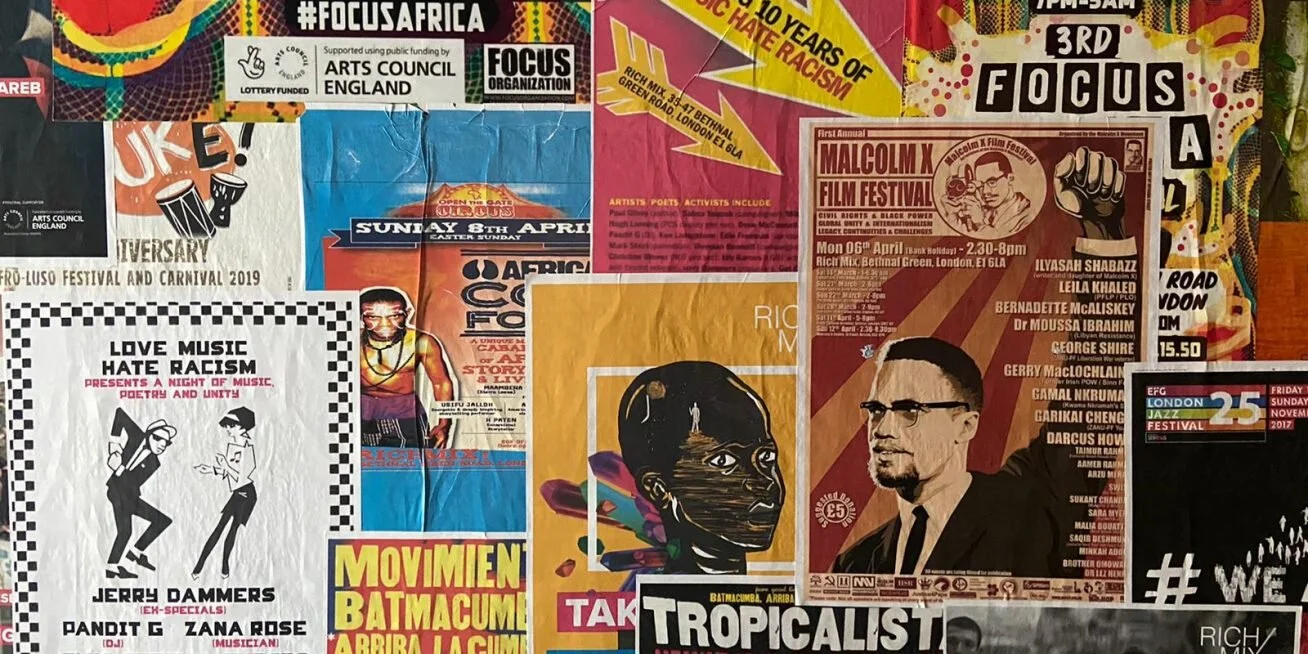
Rich Mix Picks: Resources for dismantling racism in the UK, today and everyday
In June I was asked by Rich Mix to put together a list of resources staff and the public could use to aid discussion and activism around dismantling racism in the UK.

In June I was asked by Rich Mix to put together a list of resources staff and the public could use to aid discussion and activism around dismantling racism in the UK.
Following an informal discussion within Rich Mix’s team in order to reflect on the global Black Lives Matter protests, these resources aim to spread our shared knowledge as wide as possible. My research focused specifically on education around racism in the UK and London, as well as shining a light on organisations and individuals who are working towards better representation in arts and cultural venues and the sector as a whole.
Rich Mix strives to create spaces where the communities of the world in East London can create, enjoy and share culture, and we will continue to update this list in the future.
Films With Great Backstories: Illustrating the Unknowable
This is a very loose Films With Great Backstories: another lockdown special, if you will, because not by accident did I spend many, many hours in these past few weeks thinking about mis-direction and how much we can ever trust our leaders.

I’ve wanted to write about something along these lines for over a year now - after seeing Vice at the start of 2019. This is a very loose Films With Great Backstories: another lockdown special, if you will, because not by accident did I spend many, many hours in these past few weeks thinking about mis-direction and how much we can ever trust our leaders.
I earn a living working in marketing, writing copy for arts and music venues. This often means writing copy for events that haven’t happened yet, or may be a total one-off and never happen again. You have to build hype and a spin on something that doesn’t exist yet - and then guess ahead further, to how it might make someone in attendance feel. Usually this means combining images with a press release and a playlist, as well as an understanding of the context the artist comes from. The components to build a story are all at hand. I turn it into a story I know our audience will want to hear.
Which is perhaps why I have collected this odd group of media together - a few films, two TV series, a handful of documentaries, a few books. In my mind, they each do an incredible job of shining a light on facts, conversations and moments in history that are deliberately obscured. They help interpret issues that resist interpretation. And by doing this, they perform an infinitely more difficult trick than the one I am faced with on a daily basis: they fill in the gaps of information that has been kept hidden, or break down unnecessarily complicated systems to allow non-experts to understand.
What I applaud each of these projects for is stepping out into the headwind of stories that are (almost) impossible to tell. These films and media take concealed facts and bring them together into a compelling narrative. I’ve read comments from so many people saying the majority of the narratives below are too complicated or they couldn’t keep up. I think we all know that that’s exactly what some people in power want us to think. That’s why they do this in the manner they do. But it’s never something that’s addressed, so it’s easy to forget we live with that assumption.
For good or for bad, I’ve come to realise I am one of those people who needs a narrative and human stories to better understand elements of society. Maybe that’s what we all do. What worries me is we’ll be left waiting until someone funds an expose on Dominic Cummings and Boris Johnson and what is currently going on behind the scenes. By then the statute of limitations on publicly holding both of them accountable may have passed.
So for the past few days, I’ve been leaning into the confusion. I thought back over this collection of media, and how I’d compare the tactics employed with what I’m seeing in the news right now. I asked myself if I thought Dominic Cummins et al would be above similar tactics. I believe we’re being sold something quick-to-outrage because the reality beneath it is much worse.
To note: This is nothing like an exhaustive list - consider it a mini season of discontent. I would love to hear your recommendations too.
There are a few spoilers dotted around.. not sure if they warrant a warning…
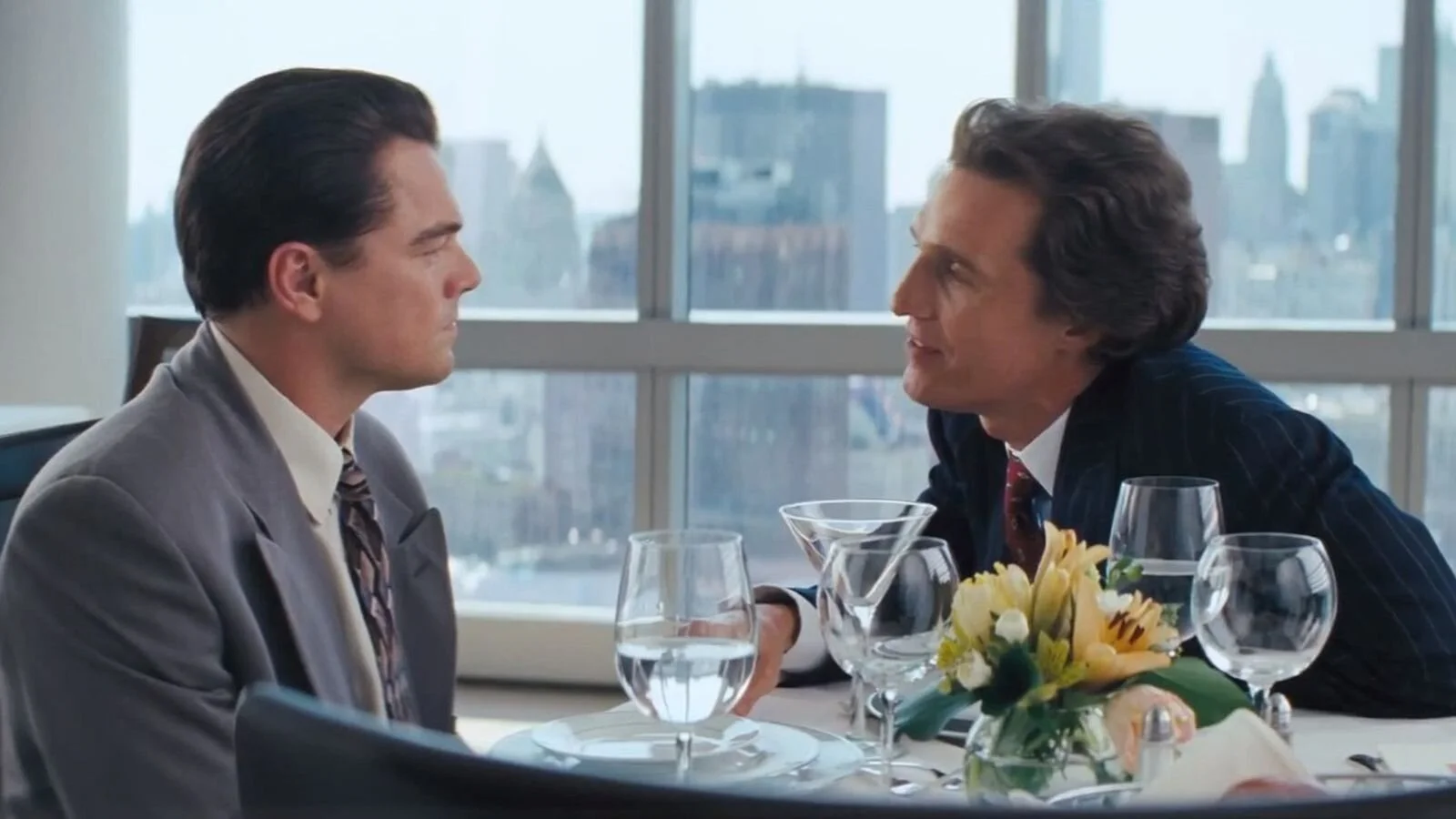
The Wolf of Wall Street, 2013
You’re likely familiar with Martin Scorsese’s deliciously dastardly The Wolf of Wall Street. Oh for the power of hind sight. This film gives us a great explainer of penny stocks and Jordan Belfort’s pump and dump scheme. It manages to entwine incredible performances from Leonardo DiCaprio, Matthew McConaughey and Jonah Hill with a searing take-down of Wall Street culture in the late 1980s and capitalism. You’re rooting for Belfort as much as you kinda wanna learn he did die on that yacht in a Mediterranean storm. And, thanks to some masterful explainers, you understand enough of the incredibly complicated mechanisms of stockbroking to know he’s a bad guy.
But did you know the making of the film is almost as unbelievable as the story? This is a brilliant article in to the almost-too-strange-for-fiction tale of how The Wolf of Wall Street was made. It gets pretty complex but keep reading - it’s kind of Fyre Festival-terrifying. And yes, it does require asking, ‘who will play Leonardo DiCaprio in THIS?’

Vice, 2018
If The Wolf of Wall Street could make investment fraud understandable for laypeople, it paved the way for The Big Short (2015) and Vice, both directed by Adam McKay.
In one of The Big Short’s opening scenes, Anthony Bourdain is recruited to explain collateralised debt obligations. A genius move.
Vice didn’t do that. And that’s something I love about this divisive film: how unwatchable it is.
Do you know how difficult it is to remain engaged with Vice? The Wolf of Wall Street has Leonardo Dicaprio carrying our attention. Vice has Dick Cheney, played by Christian Bale. Following the former U.S. Vice President from the 1960s up to the George W Bush era of 9/11 and its aftermath. Writing for the Guardian, Peter Bradshaw described Bale’s performance as “bland magnificence”.
I realised halfway through the bizarre two hour feature (probably when the film credits role up for the fake ending…) that I am not used to being emotionally invested in a someone that purposefully gives so little entertainment for the screen. IRL, Dick Cheney relied on this tactic too. As Variety explains…
“Cheney was the ultimate stealth power player — the mild-mannered functionary of burn-it-all-down conservatism. Christian Bale nails the Dick Cheney persona — dry, pointed, deceptively dull, invisibly passive-aggressive, a blank with a hint of a growl — and does it with a playful bravura that could hardly be more perfect.”
Deceptively dull is definitely it. Vice argues that Cheney was a man accustomed to being sidelined, used to working in the shadows. Slightly out-of-shot is where he did his worst.
Widely considered the most powerful vice president ever, Cheney was a political insider who placed loyalists in government, set up Guantanamo Bay detention camp, authorised shooting down planes on 9/11 and made controversial use of intelligence to justify an invasion into Iraq.
“McKay’s wacky structural alienation-effects and meta gags are more pertinent here, and the dialogue is far more smoothly managed: there is a nice fantasy scene in which Cheney and his formidable wife Lynne (played by Amy Adams) switch into Shakespearean dialogue, as a comment on the laconic, tongue-tied nature of real life.”
That scene pretty much made my skin crawl, but it’s in there for good reason. We’re told by Vice’s narrator (Jesse Plemons) that we, the audience, cannot ever really know what happened when Dick Cheney was talking to Lynne about taking the running mate offer made by George W Bush. We are told that we can never know if they spoke in Shakespearean dialogue or not.
Even if you didn’t like the film or CBA to watch it, maybe give this Vice review by the LA Times a read:
“Whatever its merits as film art, “Vice” deserves a special public service Oscar for Best Depiction of a Wayward Constitutional Theory in Film award. Whatever its flaws, the movie shines a light on the most tendentious yet consequential constitutional theory of our time. In the hands of our current president, this theory is a loaded weapon pointed at the very essence of our three-branch governing system.”
I don’t know whether this film is good or bad. Many of the reviews criticise McKay for not being able to decide if his film was a drama or a comedy - I mean, I still don’t know what to make of the intense musical number that didn’t even make it to the final cut. Perhaps McKay doesn’t know because all of this is so close to home. Reading beyond ten reviews of Vice made my eyes hurt. But Dick Cheney got away with a whole lot, in plain sight, because he was not a very interesting man to give your undivided attention to, and he knew it.
Do we resort to bizarre tropes and methods as the world becomes increasingly absurd?

The Good Wife, 2009-2016
It would certainly appear so with The Good Wife and The Good Fight. Both legal and political drama series, The Good Wife follows the life of Alicia Florrick after it emerges her husband, the Cook County State's Attorney, has had an affair. Florrick returns to work as a junior litigator at the law firm Stern, Lockhart & Gardner. The initial premise was based on writers Michelle and Robert King looking to create a series that focused on the wife of a high-profile politician following a public sex scandal - citing President Bill Clinton and North Carolina Senator John Edwards as inspiration.
The Good Fight is a spin off, also created by the Kings. It follows Diane Lockhart, the named partner at Florrick’s firm, and begins the day President Donald Trump is voted into office.
I love both of these series, namely for handling topics I have barely seen covered with such depth in other media - and for how much these series embrace the absurdity of modern life.
The Good Wife was especially brilliant at dramatising NSA wire-tapping and the murky world of post-9/11 law, when Florrick’s firm takes on the case of an American citizen who claims to have been imprisoned and tortured by the U.S. military in Afghanistan.
(I have looked for clips of this online but can’t find any! I recommend just watching the whole thing…)
I can’t think of another programme to show the farce of redaction, or in fact many aspects of US law and US military law, so effectively and creatively. What I would give to see them dramatise Cummings’ escapades…
This is the closest thing I could find for some analysis… a brilliant guided tour by the Financial Times’ David Allen Green, arguing that Cummings statement helps to “explain, or explain away” his behaviour.

The Good Fight, 2017-
If The Good Wife began to embrace more unusual, creative methods of story telling in its later series, The Good Fight took that ball and ran. No longer restrained to broadcast TV (The Good Fight airs on CBS’s All Access streaming service), absurdist, bombastic, bizarre-o comedy and drama is The Good Fight’s MO, and in the first few series, this was used to brilliant effect.
“Some of [The Good Fight’s] deepest appeal has always been its ability to be uncannily, remarkably attuned to what it feels like to be alive right now.”
When The Good Fight aired for the first time in 2017, it felt alarmingly prescient. Few other shows were dramatising how strange reality has become for many people in America under President Trump. From the first episode, The Good Fight pulled this off.
“The Good Fight — which debuted on CBS All Access in February 2017, shortly after Trump took office, and recently kicked off its fourth season — is the only show I’ve seen that has effectively captured what many Americans have felt throughout the past few years: that the world and the news cycle have become so unhinged that satire is frequently moot, and living through it has been a relentlessly exhausting exercise.”
I have to admit, I’ve struggled with the later seasons of The Good Fight, because of the increasing absurdity (Lockhart’s conversation with a bruise the shape of Donald Trump on her husband Kurt’s back kinda cinched it for me). The balance between gently meta-silly and distractingly-bizarre tipped. Perhaps unfortunately for the legacy of the show, it sounds like the Kings aren’t letting up.
This doesn’t relate specifically to my hypothesis of bringing the unknowable to light, but it does relate to the idea that we don’t know what strange effects the current US administration and UK government are having on our interpretation of reality. In many ways, the current usage of Non Disclosure Agreements is absurd at best. A segment of an episode satirising censorship in China was censored by CBS itself. No wonder Diane is microdosing psilocybin.
What else isn’t helping? Well…

The Great Hack, 2019
If you want to understand why a man like Dominic Cummings is so dangerous, watch The Great Hack first, Here - this is the trailer. Welcome to Cummings’ wheelhouse.
This Netflix documentary looks to unpack how a data company named Cambridge Analytica works, and its impact on modern democracy (most specifically the UK’s Brexit campaign and the 2016 US elections), as uncovered by journalist Carole Cadwalladr.
Before I watched this documentary, I knew big data could be kinda bad, I knew Cambridge Analytica was some kind of bad shit and I knew Facebook was bad. But what Cambridge Analytica achieved is incredibly complex, and vital for anyone that votes or uses social media.
If you find the idea of ‘post truth’ or ‘fake news’ difficult to engage with, I found this a very useful way to understand it, and how dangerous these tactics can be when weaponised. Cambridge Analytics claimed it had 5,000 data points on each American voter. If you don’t think that’s scary, and if you don’t think you could have your opinion changed by someone knowing a lot about you, then watch this documentary.
“It’s impossible to know what is what, because nothing is what it seems” Cadwalladr explains in the trailer- yap.
Here is a fascinating article also written by Cadwalladr which hones in on why we should specifically fear the work of Dominic Cummings. Published in September 2019, her article gives us a very useful examination of what Cummings was up to before coronavirus.
“This is the man who – according to evidence published by the Electoral Commission – played a central role in a scheme that resulted in Vote Leave being judged to have broken the law. A scheme that constitutes the greatest electoral fraud perpetrated in Britain for more than a century – one that Cummings has refused to come before parliament to answer questions about.”
If that tickles your fancy, why not find out what Cummings has been up to with big data and the new NHSX Contact Tracing App. You know that part in all Oceans 11 films where Danny Ocean calls up all his old criminal pals? … You couldn’t make this stuff up.
And if you would rather look at a diagram to explain the Cambridge Analytics scandal, here you go.
HyperNormalisation, 2016
As much as I feel the way I feel, I am not someone who easily puts across opinions on Twitter etc. I have a terrible recall for names, books, even systems. But that doesn’t mean my viewpoint doesn’t count. Often, in times like these, it’s easy to give up trying to make sense of it all, and to assume that things are too hard to understand. And that’s purposeful.
If that sounds familiar to you, I recommend watching a few of Adam Curtis’s documentaries. HyperNormalisation helped me realise it’s not my fault if watching the news leaves me completely confused or feel like I can’t get a proper hold of the facts. It’s not me, it’s them, and they’re doing it on purpose.
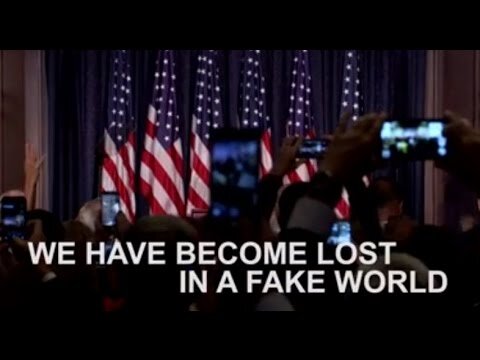
Across three hours, Curtis argues that governments, financiers, and technological utopians have given up on the complex "real world" and built a simpler "fake world" run by corporations and kept stable by politicians.
“As this fake world grew, all of us went along with it because the simplicity was reassuring.”
Brandon Harris’ review in The New Yorker at the time sums it up well…
“Curtis stuffs what could have been an entire miniseries of historical rumination into just under three hours, and one feels the corners that have been cut and the gaps that have been just barely sutured. But what suturing: Curtis is one of the most dynamic of contemporary editors, displaying gifts of intellectual montage that create art out of detritus.”
Of course, Curtis isn’t without his critics (although I am convinced the majority of them also envy Curtis’ knack for building ridiculously persuasive arguments, as well as ridiculing him for precisely the same skill).
“For as long as he has been making films, Curtis has been interested in obfuscation and doublespeak. He examines the ways in which power brokers (and the people behind the power brokers) manipulate reality, or present a rosy façade as a way to conceal nefarious activity. Yet there’s the feeling while watching HyperNormalisation that Curtis is secretly getting high on his own supply. He uses smoke and mirrors to attack the smoke and mirrors. He offers the impression that he is reporting from the other side of the looking glass, a privileged position where the eccentric shifts of global power can be viewed with chilling clarity. Yet the way he presents his arguments suggests that he trades on the ignorance of his audience. He knows that as long as he frames himself in a position of authority, he can say anything he likes and we’ll swallow it whole.”
Jenkins has possibly missed the point here: Curtis’ work, especially HyperNormalisation, feels to me like it is designed to mimic the feelings of disorientation experienced in contemporary reality.
Other honourable mentions…
If I write enough of these blogs, I’d love for ‘Illustrating the Unknown’ to become a common theme. In the mean time, I thought I’d mention a few others that might appeal…

All The Presidents Men, 1976
I will hold back on featuring All The Presidents Men properly here, as I want to do a separate post on that… but it’s definitely in the spirit of what I’ve covered. You often hear people saying this film is boring or that very little happens. That’s entirely the point of this political thriller focused on the investigative journalism that uncovered the Watergate scandal. The systems that allowed Watergate to happen are so complicated I still don’t understand it - that’s the point, that’s why they were able to do what they did.
Imagine - a scandal so boring and convoluted, no one can be bothered to find out about it.
That’s not to say I understand it fully. After watching it once with the volume tuned up to 80, I went back and watched with Wikipedia page searches in real time on my laptop. I still couldn’t keep up. This is dense shit and very difficult to understand without a working knowledge of US government officials in the early 1970s.
“It is a work barren of ideas, of imagination, and of a sense of either the tragic or the comic aspects of the subject, and one that would be essentially boring if it were not for the historical importance of the events dealt with. The reportorial techniques employed by Bernstein and Woodward differ hardly at all from those that might be used by a pair of reporters examining the misdeeds of small-town grafters, and while this is not in itself a failing—small fish and large ones are caught by the same means—the lack of a sense of history diminishes the magnitude of the story. But this account will be indispensable to those who for one reason or another have not kept up with the running accounts of events and to those who will someday place it in its proper historical setting.
”
It did make the New Yorker’s Book of the Month Club, so maybe they knew they were on to something…
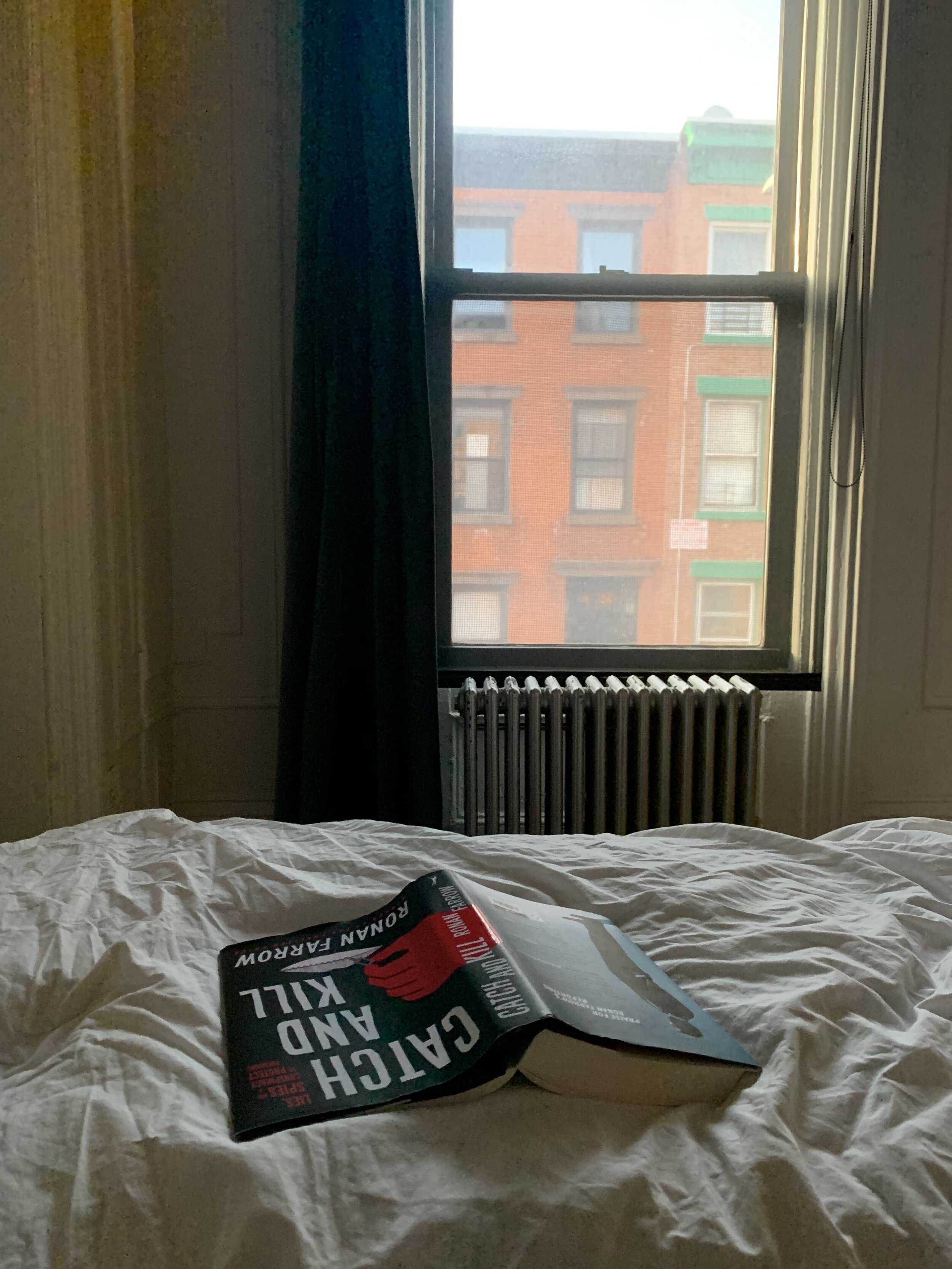
Catch and Kill, 2019
A lot of the governments or people in power mentioned above (real and fictitious) relied on gaslighting tactics for years. If you want a current-day example of how gaslighting can happen to entire groups of people, read Ronan Farrow’s Catch and Kill.
Here is the excerpt that completely shocked me and got me hooked on it.
These stories are about people who had the tools at hand and did not tell the truth. They veered away from it. Some of the most skilled storytellers in the US collected every element of the story that they could, purposefully for not telling it - hence where the title comes from. I won’t say any more as it is really worth reading with those elements of suspense in place.
Empire of Illusion: The End of Literacy and the Triumph of Spectacle, 2009
Pulitzer-prize-winner Chris Hedges’ book on illusion and fantasy in contemporary American culture was published in 2009, a year before Instagram launched and in the same year Barack Obama started his first presidential term. Which is to say, a whole lot has happened since. But when I leafed back through the book this week, many parts remain pertinent.
“The culture of illusion thrives by robbing us of the intellectual and linguistic tools to separate illusion from truth.”
Dick Cheney, fake news and the impact of reality TV are all in there, even if 2009 feels like a world away.
Amusing Ourselves to Death, 1985
Even further back in time is Neil Postman’s Amusing Ourselves to Death, which Hodges quotes in Empire of Illusion, and Postman’s famous and oft-debated analysis of George Orwell and Aldous Huxley.
“What Orwell feared were those who would ban books. What Huxley feared was that there would be no reason to ban a book, for there would be no one who wanted to read one. Orwell feared those who would deprive us of information. Huxley feared those who would give us so much that we would be reduced to passivity and egoism. Orwell feared that the truth would be concealed from us. Huxley feared the truth would be drowned in a sea of irrelevance. Orwell feared we would become a captive culture. Huxley feared we would become a trivial culture, preoccupied with some equivalent of the feelies, the orgy porgy, and the centrifugal bumblepuppy. As Huxley remarked in Brave New World Revisited, the civil libertarians and rationalists who are ever on the alert to oppose tyranny “failed to take into account man’s almost infinite appetite for distractions”. In 1984, Huxley added, people are controlled by inflicting pain. In Brave New World, they are controlled by inflicting pleasure. In short, Orwell feared that what we hate will ruin us. Huxley feared that what we love will ruin us.””
In 2017, when Trump was elected as president, Neil’s son Andrew Postman wrote a follow-up article for the Guardian. This argument feels apt for now:
“How engaged can any populace be when the most we’re asked to do is to like or not like a particular post, or “sign” an online petition? How seriously should anyone take us, or should we take ourselves, when the “optics” of an address or campaign speech – raucousness, maybe actual violence, childishly attention-craving gestures or facial expressions – rather than the content of the speech determines how much “airtime” it gets, and how often people watch, share and favourite it?”
I have to say, I’ve had limited patience with anyone I’ve seen quoting Orwell, Huxley or any kind of doomsday predictions as a way of saying “we knew this would happen all along!” (of course some writer, somewhere, would land on right now as a prediction, and what a hollow victory to finally see dystopic fiction match with reality), but I sat with both Neil and Andrew Postman’s arguments for some time, and it has helped join the dots.
What does it all mean?
Memes that take the piss out of a 60-mile round trip to have an eye test divert the attention away way from what Cummings was actually doing on all those tos-and-fros between London and Durham.
Anytime there are memes and running jokes like this surrounding the Prime Minister or his advisors, we should also be looking to the sidelines.
These people aren’t stupid. They don’t even think we’re stupid per se. They just know how easy it is to bury stories that aren’t easily told.
Finally then, one other quote from Andrew Postman, because I too looked for solutions this week. Alongside a list of films and media it was satisfying to gather because they resonate particularly well. What about how to get out of this mess?
I would urge anyone to read Andrew Postman’s article in full, as he goes on to give practical advice too, but this felt like a pertinent place to end this, at least for now:
“I wish I could tell you that, for all his prescience, my father also supplied a solution. He did not. He saw his job as identifying a serious, under-addressed problem, then asking a set of important questions about the problem. He knew it would be hard to find an easy answer to the damages wrought by “technopoly”. It was a systemic problem, one baked as much into our individual psyches as into our culture. But we need more than just hope for a way out. We need a strategy, or at least some tactics... We must teach our children, from a very young age, to be skeptics, to listen carefully, to assume everyone is lying about everything. (Well, maybe not everyone.) Check sources. Consider what wasn’t said. Ask questions. Understand that every storyteller has a bias – and so does every platform.”
You Start Somewhere
On the last day of 2019, the brilliant Zing Tsjeng posted an Instagram of how she had spent the year learning to grow and cook her own vegetables. Now the caption is almost alarmingly prescient…
On the last day of 2019, the brilliant Zing Tsjeng posted an Instagram of how she had spent the year learning to grow and cook her own vegetables. Now the caption is almost alarmingly prescient:
“WHOLESOME END OF YEAR POST: In 2019 I learnt to grow and cook my own veg 🥕🍅🌾 DM me if you want tips -it's been one of the most therapeutic and healing things I've done this year. Don't let late stage capitalism convince you that you need to wring value or profit out of all your leisure time (see: "side hustle"). Bring big hobby energy into 2020 🍠🍃”
I saved the post. I had no intention of gardening (I wish! One day…), but Big Hobby Energy hit me hard. Not having to have a tangible career benefit or even an end goal with something you love doing struck home. And doing something just because it was leisurely sounded like the biggest luxury.
I got a keyboard for my birthday and tentatively, over evenings in February and March, I sat once again next to the keys. I realised I could still read music, despite barely playing a thing since I was eighteen.
When we started having to stay home, the first thing I reached for were books. Heavy books. Books I haven’t been able to schlep along with my mobile office (read: rucksack) on the Victoria Line. Mammoth, 700 page hardbacks. I worked through them in the hours I was no longer commuting in. I realised I could still be a fast reader when I wasn’t constantly checking which tube stop I’d arrived at, or trying to turn pages whilst clinging on to 5cm of metal pole whizzing me beneath the city to my destination that day.
It’s been quite a few years since I was excited about food. Now I head to the long recipes. The marinades and the pickles and the stews. It takes five hours? See you there! It needs to rise twice? You got it!
And as you’ll know from reading this right now, I’ve been writing. And realising it’s easier when I have more than one hour to attempt to put something sensical on this website.
I haven’t cycled in years since finding it too anxiety-inducing on London’s busy streets. But now we set out a few times a week, winding through back lanes up to Alexandra Palace. My bike, which was resigned to my flat’s hallway, is now out of retirement, taking me across north London’s endless terrace houses to places I couldn’t reach on foot.
The aimless cycling reminds me of doing the same, each day, for over two years when I was a teenager in North Yorkshire. I was one of the only people I knew that couldn’t drive, and our village was basically a hamlet. I wanted to go somewhere each day, so I cycled, setting out just before dusk each evening on a ten mile-round bike trip through deserted fields and farm tracks.
This week I thought about how I have never felt good per se at cycling, but I still managed to cycle 90 miles overnight once. I am not great at kettlebells but I went up a weight this week to lifting 8kg. I wouldn’t say I am that musical compared to many of my friends, but I can still play piano with both hands and I can feel the muscle memory coming back.
Now that I read it again, Zing Tsjeng’s post reminded me of another person stepping out from unknown to familiar. Last year Alexandria Ocasio-Cortez announced that she would be tending to a community garden plot for a few months in an effort to help bring more mindfulness into her life. Something that resonated even way back in spring 2019 was that she was intent on being a total beginner. Being clueless and learning upwards. She said she was consciously doing this to also show that it’s okay to not know anything and to change that.
In the first week in self-isolation, I thought about how maybe returning to reading, piano, cycling and cooking, was a way of going back to childhood pursuits - maybe a comfort of sorts.
In the ensuing weeks I realised it was something else: these things are just me. It doesn’t need to feel juvenile or trivial. I don’t need to be that good at it, or remarkable in any way. This is just the bare bones of me.
There is so much we can’t control right now - but easing into something you once loved, or maybe starting something from scratch - there is grace there.
✶
Accounts I am loving this week in aid of trying something new or just being proud to be a beginner:
Salmon Creek (it’s a private Instagram but it’s worth it!)
Paul Fieg for Quarantine Cocktail Time
TikTok is the perfect absurdist comedy for now
I joined TikTok on the day my first client shut.

“Are you Tik-Toking?”
“No”
“Yes you are”
“…”
I joined TikTok on the day my first client shut.
A few days before, I’d laughed at a video, shared over on Instagram, a parody of the total denial the UK seemed to be in at the time. I sang Break My Stride (ironically) as I stayed home and batch cooked food for the freezer.
By Monday, I’d had bad news after bad news call. I love chatting away to people on the phone, but that day, seeing a client’s name flash up on my phone screen was likely to mean losing that job. By the afternoon, the phone calls were making me recoil. My honeymoon was cancelled. Best friends’ weddings hung in the balance. Everything I was looking forward to this year, including a steady income, had vanished in the space of a day.
In the evening, I remembered how much that TikTok video had made me laugh. I also remembered seeing Candice Braithwaite make some utterly brilliant TikToks and share them to her Instagram. I set about finding this hallowed platform. I downloaded the app, unsure how to search for just a song title and feeling the full extent of being born in the 80s (just).
Thankfully, like some MTV2 magic from yesteryear (where that one music video you wanted to see would eventually come on the rotation, if you watched for long enough and hoped hard enough), it came up. I laughed my head off at the coincidence of finding it, in this sea of absurdity.
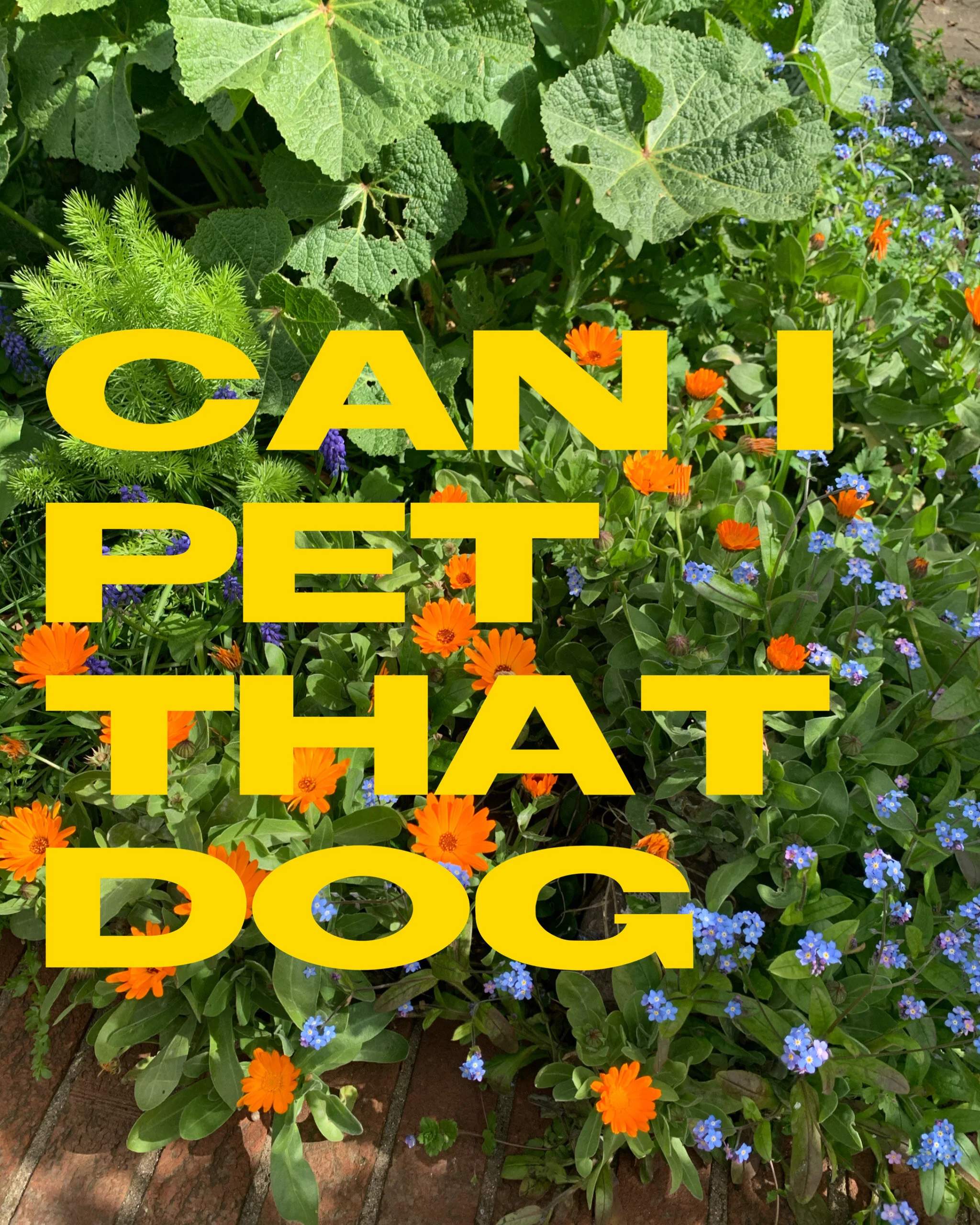
The next day, when a low hour hit, I opened up the app again… this time I was greeted by hundreds of potatoes recreating a scene from an Adele concert sang along in unison to Someone Like You. Then by a joke where someone walks around somewhere empty (anywhere!) singing Redbone’s Come And Get Your Love and pretends someone is singing back to them. And then a stuffed toy unicorn dancing in a make-shift club with Monopoly thrown down around it. My favourite meme so far is the Can I Pet That Dog meme, because it speaks to the person I am right now. I had to be banned from shouting it all day every day by my new co-worker (my husband).
I’m not the only recent convert. TikTok saw an 18 per cent rise week-on-week in downloads in the United States last month (16-22 March), according to a report in Music Business Worldwide. We are about to get obsessed - as seen in the number of downloads estimated by Sensor Tower for Italy, which has been under government-mandated lockdown since 9 March.
Sensor Tower estimates the app was downloaded 237,000 times last month (16-22 March) in Italy, which represented a 35 per cent increase compared to the prior week (9-15 March).
While the streets are so quiet and there are no crowds to get lost in, I love the sensory overload that comes from being blasted with this app’s budget-at-best Eurotrash pop chosen by users, or the on-purpose hilariously-DIY covers of a rap song someone’s sung to their own TikTok video.
The inner narrative and micro visual jokes within TikTok are the most compelling thing about this app - and why its humour is so apt for now. Those gags ping from user to user as undercurrent humour: a joke gets made, the next day it’s been subverted, and so on. Because we’re all stuck doing the same thing right now, and public mood has changed so rapidly from week to week, these running jokes morph across the app like a wonderfully chaotic call-and-response.
My friends are cautious. When they’ve checked in with me for the last week, all I’ve been able to give them as a status update is “wElL I’M pReTtY InTo tIkToK rIgHt nOw So tHaT’s tAkInG uP aLl oF mY tImE”.
Facebook has never been a platform for self-reflexive humour. Instagram and catty comments don’t come off well in translation. Twitter is another mess entirely. But if you’re missing the office gossip or just a family to moan about, WELCOME TO A WHOLE NEW WORLD MY FRIENDS. Have you caught up with the Karen memes? Have you seen everyone’s Dad inexplicably be persuaded to do a dance routine to The Weeknd’s Blinding Lights? Well then.
Most of all, I love that I don’t have to participate in this to enjoy it. I do not get notifications. I don’t have an account, and I have absolutely no desire to create my own video - neither am I told I need to, in order to be engaged. I don’t feel the need to like anyone’s post or comment. Unlike every other social media account that demands my attention, no one’s content is that compelling on here that I feel the need to ‘follow’ or endorse them. I’m quite happy letting everyone do their own weirdo things ad infinitum, thanks very much.
I love the family in-jokes none of us can get just as much as the well-thought-out gags. I love the humblebrags and glimpses into people’s ultra posh homes just as much as the super low budget pranks. Endless covers of Phineas and Ferb’s ’Dude, we’re getting the band back together’ introductions to people’s sprawling family members now awkwardly stuck in quarantine under one roof that I never have to see again.
It’s those kinds of videos that make me think now is the perfect time to join. There’s an absurdist mood that’s taken over the app, with so many of its users stuck inside. The content creators I’m accustomed to seeing clogging up Instagram’s algorithm don’t get so much room here, and instead there’s a llama dancing to The Notorious B.I.G’s Hypnotize and a concert of gummy bears singing The Killer’s Mr Brightside on the floor of someone’s kitchen. I love it ALL. However. If your dance routine doesn’t involve a begrudging parent, it shouldn’t be going online.
The non-stop variety and sheer range in the production value of content mean its by far the most absorbing app I have on my phone. I am currently restricted to two TiKToK sessions a day, as per my exchange with my ‘coworker’ at the start of the post. I relish every second of strangers doing stupid stuff for attention. Play on.
Lessons I learnt by 29
After the long haul that has been my 20s, I feel like I learnt so much in this final year I was cramming for the exam that is THE REST OF MY LIFE.
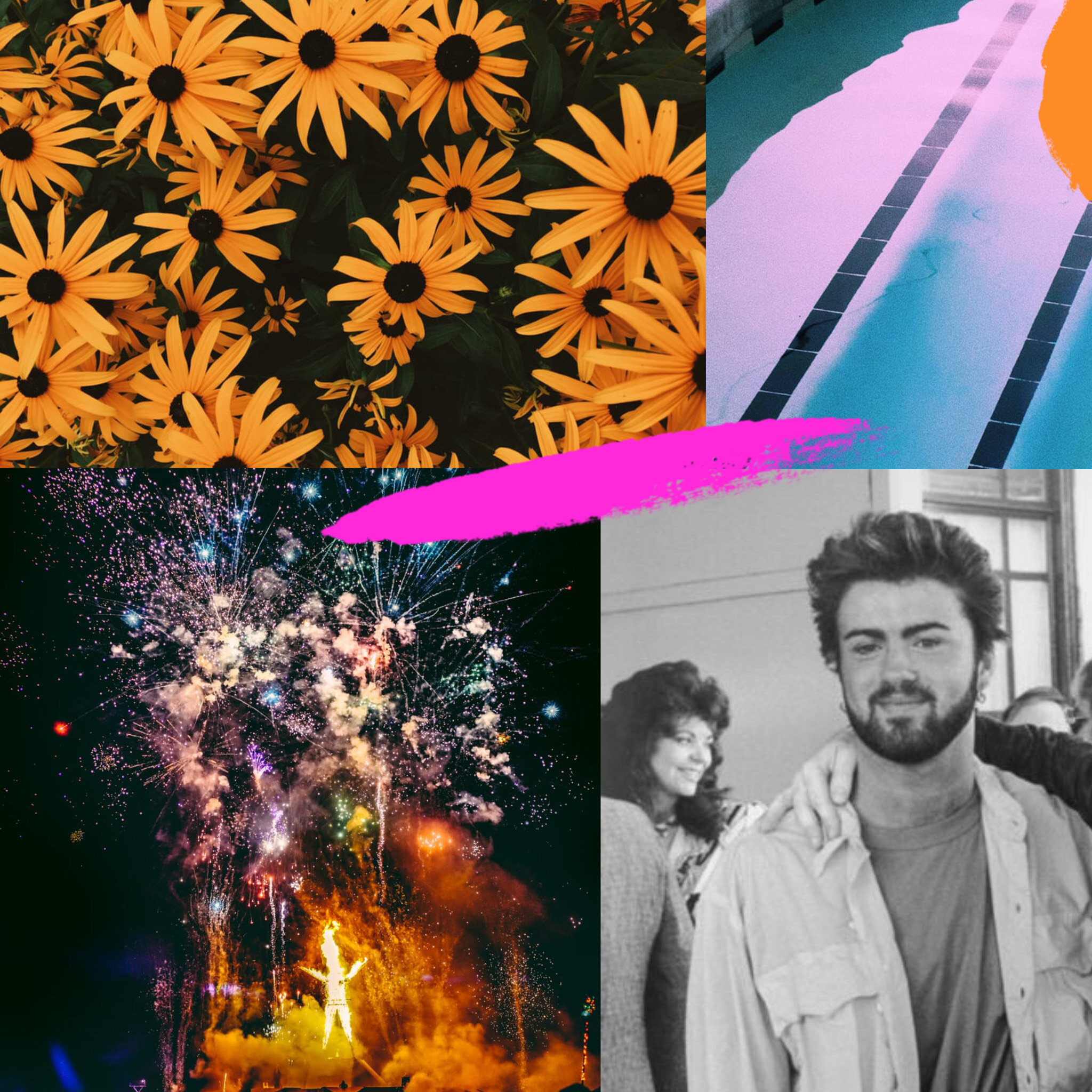
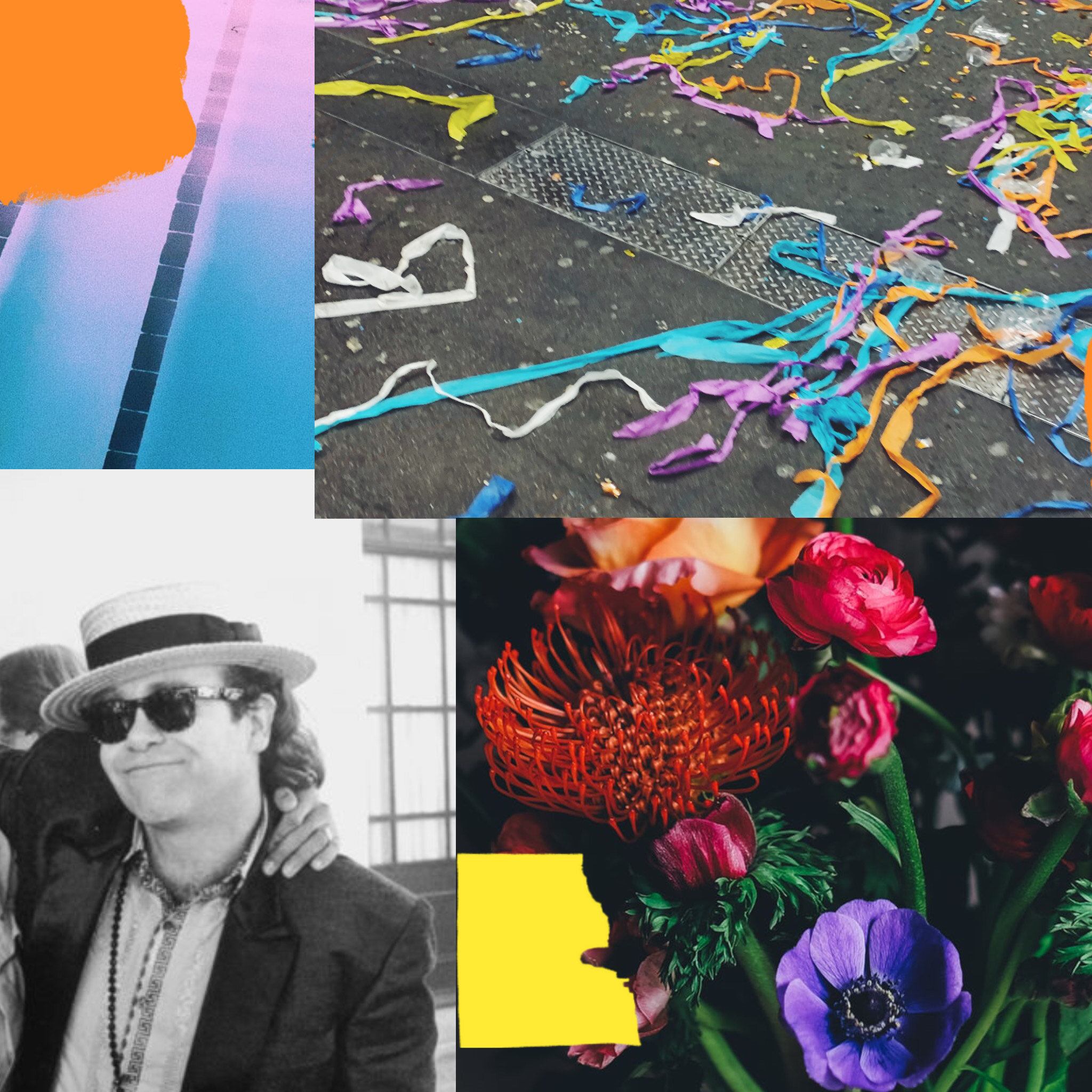
It’s impossible not to be circumstantial about this, but I thought it might make someone laugh.
After the long haul that has been my 20s, I feel like I learnt so much in this final year I was cramming for the exam that is THE REST OF MY LIFE.
So I figured I’d tell you what I learnt. Why not. Tell me what you did. I’m only just getting started.
Do not try to sing Elton John at karaoke. Even if you are doing Elton John to your best mate’s George Michael AND she has singing lessons. This man is the don for a reason.
I can’t impress on this enough and if you have your health you won’t hear it. But try to: Your body is the one thing you really have in life. Treat it with respect. Be proud if you can manage whatever it is that you’d define as an achievement. Especially when it gets you home at 8am after partying. Treat it with the kindness you reserve for a best friend. It won’t be there forever. Try to love every day you have with it.
Practise resting your thoughts on gratitude for as long as you naturally ruminate on negative thoughts. Through neuroplasticity our brains are able to reorganise themselves by forming new neural connections. You can actually change how your brain is wired by doing this.
You don’t have to be friends with your exes. Don’t collect them. If they make it a challenge to be around them, forget them.
No one really expects food at parties but they do want good playlists and ice.
You’ll know you’re doing your early 20s right if It’s A Wonderful Life feels like sentimental waffle.
You’ll know you’re doing your late 20s right if It’s A Wonderful Life suddenly becomes the best film you’ve ever seen and the purest meditation on reality.
Saturn returning might be a load of bollocks but spending your late 20s actively working out what you do and don’t want your 30s to look like can only be a good thing for everyone involved.
But don’t go around telling people they made it through to your ‘fourth series’.
People are greedier when there isn’t enough food. And that’s a kind of lesson in everything.
Travel within your means as often as you can. The years you can do this are shorter than you think. Go on every holiday as if it’s your last.
And on that note. Don’t row in airport lounges. Give it 12 hours and you won’t remember what you were rowing about anyway.
Dirty martinis with three olives are both sexy AF and dangerous AF. Drink that fucker slowly.
Whenever anyone says ‘oh I could tell you a lot of stories from that time’ they generally mean there was a lot of drugs and sex going on. But telling stories is fun.
Unless you’re staying up for a sunrise, almost nothing good happens after 3am. But that’s one you probably need to learn for yourself.
Savings are amazing. They give you the real freedoms. No company’s advertising will ever tell you this.
Sometimes you just don’t earn enough money to save, and that’s okay too.
If you’re aware of being frivolous with money, or simply just not understanding how to be better, get strict with yourself, today. They don’t teach you this in school but credit cards and overdrafts will unravel your life just as quickly as addiction or falling in with the wrong crowd. Employ a financial adviser you trust (an accountant or bookkeeper) for a few one-off hours to tell you everything you need to know.
Lots of your friends will leave. Don’t take it personally - go and find them once a year. Stay with them and their new lives. These times will become the most precious moments of your 20s.
Marginal gains can change your world if you let them. The life you want might always feel like the next pay day, flat or job away. But that doesn’t mean it’s unattainable. Five incremental changes will get you nearer than doing nothing.
As often as you can, go to the outskirts of your comfort zone.
Equally, don’t be a tourist when you get there. Respect that this is other people’s normality. Learn from here.
Best friends and family bring a richness to your life that is impossible to fake. Treat them with respect. Do not take them for granted. Do not let the good ones go. Invest in those relationships in every way you can.
You honestly do not need to get on with everyone.
Manners and being polite matter but the real thing you’ll need to teach yourself this decade is how to stick up for yourself. Fight that corner. No one else will do it better than you.
Go and actively tell everyone in your life that you are very close to how much they mean to you. People are gone too soon. Let them hear it from you while you can tell them.
(Consensually) Hug harder. Honestly.
And - you knew this one was coming: The only way to get away with singing Elton John is to go down with that karaoke ship. Without so much as a wince. Carpe diem.
Things We Never Did Before
I don’t think I can write about now coherently, or in a way I won’t want to change later, because there is no distance. As much as it is tempting to do so.
I don’t think I can write about now coherently, or in a way I won’t want to change later, because there is no distance. As much as it is tempting to do so. But I thought a list of things we’ve never done before might say more than that. Or capture some of the details I might later forget, which will help me write about this in the future.
nb - please note, these are the nicer end of the spectrum of our experiences right now. I don’t mean for any of this to sound smug. I’ve simply chosen to collect the pleasurable elements together - I’m leaving the less pleasurable out.
We brewed coffee and unlocked our front door, then stood on our front step and waved at our neighbours. We don’t know their names yet.
Keelan baked bread. His second loaf is great.
We sat on the sofa and looked out the window in the sunshine.
We listened to more records at home than we’ve ever done before.
We laughed (with love!) at the family at the back of us (the ones that never got curtains) that do indoor personal training every morning. Maybe we’ll know their names too one day.
We did a kettlebell workout in ‘Gymnasium 1’ (the kitchen) and then ‘went for’ coffee (also in the kitchen)
I cycled for the first time in years, grateful for the bike my husband repaired for me, restored for me, and kept for me.
We opened our old 7” record boxes and made a ‘guess the intro’ quiz for our friends.
I face timed my 18 year old cat in Yorkshire. She head butted the phone, we think she recognised my voice.
We put off opening new packets of food. Eating something else open instead.
I left voice notes to friends.
I get up an hour early to sit in the sunshine in our living room and read.
Worked out how a long-forgotten tablet worked so I can read books online easily.
I washed my wedding dress by hand
I listened to our prime minister more than I ever thought I’d have the patience to do.
We let go of plans we’d made for 2020, and the idea of shaping that year into ours.
Instead I started to get a glimpse - just a glimpse - of how 2020 would shape us.
All We Do Is Tell Stories
We moved in next door to Frances on top of a hill in Lewisham when my brother was ten days old.
Our house was number 59 and it was our first home as a family.
We moved in next door to Frances on top of a hill in Lewisham when my brother was ten days old.
Our house was number 59 and it was our first home as a family.
We were a whirl of real buggies and toy prams, rice crispies and guinea pig poos, library books, bunk beds, toast eaten off of pink plastic plates, beakers, shouts of “have you checked the sideboard?”s, spaghetti hoops, hundreds and thousands, bath toys, Puppy In My Pocket and Texas on the CD player.
The year was 1991 and Frances lived alone, in the terrace house next door at number 57.
She moved in to the house in the mid 1940s, fifty years before us.
It was a council house back then, and Frances would hide with her sisters beneath the kitchen table when the air raids sounded, forced to raise her only daughter, Jennifer, on rations in the years after the second world war ended.
I remember that kitchen table, and her kitchen: pastels and doilies, Charles and Diana paraphenelia on every surface. I remember it well because it didn’t change for the entire 25 years I knew her.
Frances’ husband Kent died a few months before we moved in.
Jennifer, now with her own family, had moved to Dubai in the late 1980s, leaving Frances and her siblings alone in south London.
Frances refused to move over there (a fact she relished).
If either of my parents were late back in the house from gardening, running to the shops or returning from work, we knew why: Frances.
Getting “Frances’d” is what my parents called it when she caught you in the cross hairs: a twenty minute conversation was the minimum, two hours the record.
Getting Frances’d changed my life.
★
Our first Christmas as a four was her first Christmas alone. Frances asked my resolutely vegetarian Dad if he could stuff the turkey for her. It was a job Kent had always done, and Frances was diminutive - coming close to 5ft if she wasn’t stooped, but she always was. Frances was disarmingly firm and incredibly shrewd but not stern.
She must have aged in the time I knew her - but in my head she is crystallised in a housework apron the kind no one wears anymore, pastel cardigans and face powder. She existed under a cloud of white hair with two blue, piercing, alarmingly birdlike eyes. And there was no way she had the heft to stuff a turkey.
Instead, my Mum stepped in and stuffed that turkey. It became one of our family jokes - like how it was Mum that knew the car registration for the garage, not Dad. It became part of the stories we’d tell.
Our little family soon outgrew that house, my Dad running his new business from the upstairs bedroom, my brother and I taking over the living room with our bunkbed and our PE plimsols and library books. We moved away to another part of London with different schools my parents could see us growing older at, leaving Frances behind in that house next door.
On the day we moved out I remember Frances came to wave us off, our family having to order an extra lorry for all our procession of things to be packed in to, Frances standing watch from pebble-dashed number 57 with her house work apron on, using the door handle as support to stand.
We left when I was six, my brother four. Our whole lives until then a blip in time to an 80 year old.
★
And yet, Frances became part of our fabric. She made sure of that.
In the years that followed Frances sent my brother and me a cheque for £5 every Christmas and for every birthday for the ensuing 20 years. At Christmas, Mum was to buy us each a selection box. At birthdays, it was simply a gift. With each of these presents came a letter from Frances.
You can guess - a letter from Frances meant getting Frances’d. And now that we had moved (again) and lived 200 miles away in North Yorkshire, it was a reason to stop.
What stays the same with a family that moves every handful of years? The people that connected us when our homes didn’t. The Texas CDs and the “have you check the sideboards” and the 60 minute diversions from Frances that still punctuated our lives.
If we were all home, someone would read them aloud. If not, they’d be left on the kitchen table for the next person to read in quiet solitude.
These letters were just as she spoke. Tight, defiant writing crammed into four or fave pages of floral letter writing paper, determined to hold your attention, never pausing to allow it to wander. Frances was one of nine children, and her favourite subject was their whereabouts (of the ones that were still alive), and their children’s comings and goings - like Lewisham’s answer to Gabriel García Márquez.
”How does she remember everything?” We’d ask each other each time we’d all finished reading one. The other neighbours that had died, the reports of grandchildren must have been told three times before reaching Frances.
Another favourite topic: what the new occupants of our house had done with the garden on that hill in south London that now felt so far away. Despite their length and depth, Frances’ letters never ventured to gossip or exaggeration. It was the facts. It was life, as Frances saw it. Sometimes, life does sound exaggerated. More often than not, the honest truth holds more comfort.
★
When I was 18, I moved back to south London to go to Goldsmiths.
A year after settling in, with Frances’ letters still landing on our doormat in Yorkshire like clockwork every Christmas or birthday, I plucked up the courage to go and visit her.
Still disorientated from moving from a rural pig farming village 200 miles away to slap bang into New Cross, I hadn’t realised just how close our first family home was - and connected the newly familiar streets of halls and chicken shops, Student Union and beer gardens with the old, winding paths of hilly roads and terrace houses, the toy library and the chemist, stretching out into Lewisham.
The streets felt so much smaller, the houses no longer towering over me.
I knew the way, instinctively, tracing the pavements from the park I learnt to ride a bike in to the front gardens our babysitter would let us steal flowers from to make perfume.
And just like that, I was back outside pebble-dashed number 57, knocking on Frances’ front door.
Her house hadn’t changed a single detail. I think every piece of furniture was still in place. Everything from the artificial fire place to the velour sofa, the stair master and that day’s copy of the Daily Mail.
I had taken the afternoon off early, because I knew I’d be here some time: I was about to be Frances’d.
We spoke on everything, from the neighbours to her extended family, Jennifer to the supermarket’s car parking. I was relieved that nothing had changed. I had become a staunch vegan, and Frances served us up buttered ham rolls with sugary, milky tea (the addition of sugar she had insisted on, a hang-up since raising Jennifer on rations). And when I could see that context, I ate without question.
We settled into our respective armchairs in Frances’ front room, and the stories began.
Frances was an incredible raconteur who was almost impossible to interrupt despite the fact her stories didn’t focus on her or how she felt - meaning it was also difficult to tire of them. I wouldn’t be able to retell any - it was the minutiae of time.
I would try to keep up, and would often manage for twenty minutes or so, before becoming lost in the intricacies of siblings and grandchildren and Dubai and a trip to the Levi’s factory in Germany they took in the mid ‘70s.
But she was ever so sharp. I had been around plenty of older people with dementia and I never saw a trace of it in Frances.
Now as a 20 year old, I realised for the first time that just like her letters, Frances would leave the inverted commas of any proper noun in when she spoke, too. My boyfriend’s name took it with reverence - but the pause would change - with Lily Allen (who was featured in the Daily Mail a lot those days) there was judgement - I never worked out why.
Two hours went by, more tea brewed, Frances went to the outdoor freezer to fetch the cheesecake we ate with ice cream and cream (that yes, I’m sorry to say left me sick for days). Photos of Jennifer and her new family adorned every surface of the dining room, Charles and Diana remained in the kitchen. I remember thinking to myself, ‘you could look at this room and believe it was 1991 again’.
It was getting dark, and I managed to intercept Frances long enough to tell her I had to go home. Back in halls, back in another reality, friends had called and txted me wondering what on earth had happened to me the whole afternoon.
I made a pact with myself to visit Frances every season.
Soon, we had our own traditions. I would go round for elevenses on a Saturday, and sit with Frances as the other neighbours popped in. There was always Joyce, who was in her late 70s and recently widowed. She went to her husband’s grave every day (and continued to do so for ten years until she passed away). She would come by on her way back from the cemetery, Frances serving thick slices of lemon drizzle cake to distract her good friend from her grief.
Joyce had a giant tortoise called Tina who she had (rather brilliantly) also named her (now grown-up) daughter after, meaning conversations about her day to day life feeding one Tina and on the phone to the other were quick to descend into absurdity, and stayed that way.
While Frances put the kettle on again, Joyce would give me the run down of the street, like a compere for a variety show, twitching the curtains with every new arrival or double parked car.
We went on like this for years. Initially, I had thought it might be nice to spend time with an older person, after both my grandmothers had died within a few years of each other during my early teens. But in time, I realised it wasn’t anything maternal that I got from spending time with Frances - I think above all it was simply the continuity of her wonderful, understated company.
What’s more, when you make it to 90 and 100 is in sight, the smaller things really begin to pale into insignificance. As someone with a strong inclination towards anxiety, being around a person who had been through everything I was so afraid of and lived to tell the tale was incredibly powerful. It might sound funny to think of a diminutive 5ft nonagenarian in times of crisis, but ‘What would Frances do?’ became one of my first thoughts whenever I started to lose control.
★
Now in her late 90s, Frances would send me a letter after every visit, and I would re-arrange in my reply. I avoided using her house phone because it would rush her to reach it, and her hearing aids meant she found it difficult to hear anything once she did pick up.
But there was a call a few years later. Jennifer was back in the UK - Frances had fallen in her kitchen, and had been taken to hospital and soon into a home.
I offered to meet Jennifer and travel down to the home, deep in Kent, one Saturday.
Jennifer was a hard woman with a ‘speak to the manager’ haircut that wore Nike windbreakers in autumn and chain smoked the minute she was no longer in sight of her mother. I only recognised her from the many photos Frances had of her all over her house.
Where I was so used to sitting down and letting the stories begin with Frances, conversation with Jennifer was stilted. She was between my grandparent’s age and my parent’s age - and even though an extensive age gap had never stopped Frances and me from chatting about Strictly, it felt like with Jennifer, we had even less in common. Her children were ten years older and her grandchildren ten years younger.
When I told her how long it would take me to get to the care home, she told me not to bother. I told her I was on my way.
Meeting her on the bus en route to the care home, I finally managed to get Jennifer talking about her home in Dubai. There she had maids and servants for everything. She sent her maids on cookery courses, but she still complained there was so much in a house to organise with all those extra people milling around, helping them.
I hadn’t felt it before, when I hadn’t been in touch with Jennifer, but over that week, I became convinced Frances’ family thought I was in touch with their mother and grandmother for some kind of inheritance. They were suspicious as to why I’d travel across London to see her, or travel there more than once a week. In my eyes, I had already lost a grandmother in a nursing home and knew all too well that the ensuing years are spent thinking about how many times you wish you could have visited - I didn’t want to do that again.
Later that week, when Jennifer wanted a night off, I came back with my boyfriend.
Frances’ room at the care home was at the end of a corridor, her hunched figure curved right over in a chair propping open the door, placing her as near to the action as she could be whilst still in her room. She seemed much more frail in these unfamiliar surroundings. Her muscle memory didn’t have every piece of furniture and appliance stored in it here.
I wheeled her into the garden and introduced her to my boyfriend, pleased I had saved a new introduction for her days so out of place, to give her something else to think about. Covered in bruises and out of her element, my boyfriend escaped a true Frances session.
Before leaving, we sat Frances down in the living room, where everyone else was watching Carry On Camping - Frances looked furious. She had no time for slapstick.
★
To my relief, Frances recovered. She was 99 by then, and her 100th birthday celebrations steadily took over more of our conversations.
Joyce and I would sit in the front room quizzing Frances on who she would invite, how many sets of neighbours from each house on the street that had since moved away.
Probably wisely, Frances’ wider family stepped in to organise the day. There were RSVP cards and catering from the local bakery and family coming from Dubai.
On that April day, her birthday was wonderful.
I brought my boyfriend into a house full of every (living) character Frances had ever mentioned to me. All the sets of neighbours that had moved into number 59, our old house next door. All her surviving siblings, everyone on that street. I had to stop myself from crying as I picked my way through the crowd - a house empty apart from one tiny person for so many years - now packed full of people of every age and era of Frances’ life.
We stood in the garden my parents had spent those days in the 90s leaning over the fence, listening endlessly to Frances. Joyce fussed over the sandwich platters. Guests chatted amongst each other, quietly, tentatively each realising they’d all been Frances’d for years, before sharing their favourite stories about her. I met everyone that had lived in my childhood home in the next twenty years after I left. Frances’ kitchen was overrun with buffet food and the neighbours had bought their own chairs to sit on.
For a few years I had wondered how Frances would hold court at her 100th birthday, with so many people to retell her stories to, but instead, she was mostly quiet, surrounded by her family as they fussed over her. A season finale. All of Frances’ stories were here.
★
That was the last time I ever saw her. Her family didn’t tell me when Frances passed away, and I don’t know how it happened - in true irony, once the best storyteller I’ve ever met was no longer around, the facts stopped being relayed to me, and the stories stopped.
I didn’t hear from Frances for two months, and I had a strange feeling for weeks that something was wrong. I began calling her home phone, as well as the care home she’d been at before.
I could have made the trip to number 57 that I’d made so many times already, but I know, deep down, I feared I’d find an empty house. I just wanted an answer. Without Frances to check my facts against, I couldn’t remember which house Joyce lived in or who to ask. Jennifer’s UK mobile number rang off and I’d never asked for her Dubai one.
One day, at work, I started to panic as to why I couldn’t just know what happened to Frances.
I couldn’t believe my friends and I could be so connected as to know which street we were asleep on, but I had no way of knowing if Frances was still alive.
I eventually searched for her house online. I figured if she was in a home, Jennifer would have put the house on the market, and it had only been four months by this stage - it would have to be advertised somewhere.
Despite being stripped of all their furniture, I recognised number 57’s interiors from my laptop screen, and called the estate agent to ask what had happened to the owner.
I burst into tears when he told me she’d passed away months before. I recited my number for him to give Jennifer, whose suspicions of me hanging on for the inheritance can’t have been helped by me searching for Frances’ house online. But Frances wouldn’t have cared about that, and I don’t either.
Jennifer said she would call me but she never did, and so I never found out the story behind Frances’ final days. But I kept every last one of her letters. They are here now, interspersed between 10th birthday cards, GCSE results and halls of residence forms. I find them between pages of notebooks full of harried to do lists I can no longer remember the urgency for. I’ll find one filed with a tenancy agreement or a music festival brochure I can barely recall attending. Sometimes I find a pile of them stacked behind some DVDs we have no way of playing any more. Until a few years ago I can guarantee you there would always be one tucked in our sideboard at my parents. And our stories about her won’t change. No gossip, no exaggeration. Just the facts, as Frances saw them.
★
Rest in peace, wonderful friend.
20 things in 20 minutes: Things I learnt after being freelance for one year
A few years ago I gave a talk at Generic Greeting’s birthday party in Manchester about ‘things I wish I had known before going freelance’, and at the time I promised myself I would put that advice online too, so here we finally are.
A few years ago I gave a talk at Generic Greeting’s birthday party in Manchester about ‘things I wish I had known before going freelance’, and at the time I promised myself I would put that advice online too, so here we finally are!
This advice is completely inspired by a piece of writing I found by journalist Kate Hutchinson right before going freelance - you can read it here. In it, she managed to debunk a few myths I was worried about and make it all feel a lot more real. The advice she shared meant I was finally able to make the jump myself - and I remember thinking, I’m gonna do this and write my own advice at the end of one year.
Well… that was five years ago! But I’m really interested in demystifying what it’s like to work for yourself, or showing people that it can be so much more rewarding than a regular job, and not to be scared of that. Now I have started working on my own website, I’d like my blog here to be a place to share some more stories from freelance life, as well as advice on staying inspired when you still have to pay the bills, and pushing your own creative practice forward… so stay tuned for those.
But first, let’s begin at the beginning: back to the speech! Looking back now, some of these points might feel obvious to you, but I learnt all of these things on the job, so it figures other people might not know them either... let’s get into it.
✶
20 Things I Learnt After Being Freelance For One Year
At 25 I was creative director of a startup but was not allowed to attend board meetings. I was earning around £32k a year, with severe anxiety and moderate depression. I was unhappy, and had been for a long time. I had applied to countless jobs and never landed so much as an interview.
I was away in Berlin when a few friends suggested I could make something - a business, a brand - anything, for myself, from scratch. Then I would call the shots. My flight back to London was delayed by 12 hours, and to be honest it was the best thing that could have happened at that moment in time. I used all those hours to plan my next move.
Arriving back home, I knew I wanted to leave my job, but I also needed time to establish myself. I needed time to plan, and there was no way I would get that headspace from working in an office five days a week.
Knowing my bosses wouldn’t be happy about me just wanting time off to develop another career, I told them a very loose truth that I wanted to spend some time each week working on my writing. They let me push my full time job into three days, working 6am-5pm from home every day. This meant I was able to start with one freelance client, and over time, build that into four clients. Twelve months after going full-time as a freelancer I earnt less than half of what I was earning when I was in full time work, but I was already so much more fulfilled in my work than I thought I ever could be.
In just those twelve months that was abundantly clear, but there were also some INTENSE life lessons learnt in that time - and ones I believe it’s important to learn for yourself. Nevertheless, I feel like if I share these, maybe it’ll make it easier for you to spot when that trusty old life montage is happening before your eyes too.
So here are 20 things I learnt after being freelance for one year. Tell me what you learnt too. Let’s get wiser, together!

1. There is no financial security, so work out what your security fund looks like
If you graduated in the UK after 2008, you’ll know the last decade hasn’t been characterised with financial security for anyone. Being freelance is no longer considered the risky choice it used to be - it is far more normal. But that doesn’t mean you can get complacent. If you are in full time employment and considering going freelance, set the stage for your finances. You may not be able to save six months of your salary (who can?!), but a month’s worth of rent and bills doesn’t hurt. I’d also recommend having the means to repurchase all of your vital equipment - whether it’s savings, insurance or a credit card - if you need a laptop, camera, or anything else to do your job, make sure you can buy it again in an emergency.
2. You don’t have one boss any more. You might have five. And five inboxes, and five sets of team meetings to attend
This was a major appeal for me to go freelance: I was so tired of trying to guess the every whim of my old managers and ignoring my instincts. But when you do make the switch to being freelance, you’ll start to see that instead of one person to answer to, you’ve acquired a lot more. They may take up a lot more headspace than one - so get used to juggling. The same goes for inboxes and team meetings - the expectations don’t get lower, you just have less time to devote to each one.
If you want long term clients, try to invest extra time to behave like another team member if you can. It’s unlikely you’ll get reinbursed for this financially, but if you’re looking for stability, it’s worthwhile - or be clear in managing your client’s expectations of what you can do/attend.
3. You don’t have to say yes to every job
This was probably the key lesson I took away from my first year of freelance. I said yes to every opportunity that came my way. After a while, it’s time to get strategic. Every freelancer you know can tell you about the job that did them in, when they realised they’d totally overstretched themselves. Mine involves frantically baking key lime pies for a vegan restaurant I worked for in order to pay by rabbit’s vets bill, and inevitably dropping a load of them due to being so stressed out. Before saying yes to each new proposition, do your own due diligence: how many hours will this job take? How much will you earn for each of those hours? What travel and other expenses will you need? If the monetary gains are low, are you at least gaining valuable experience?
4. It’s not all oat milk flat whites and avocado toast, but make time to treat yourself if you think you deserve it
Another one for the first year freelancers - if only because the novelty does wear off, so grab it while you can: If you’re making rent and covering your bills, you deserve a coffee break. Take yourself out to that place you can never get into at the weekend. Go bask in it BABYYY.
5. Keep developing your network
It can be really hard to network in a big city but don’t let that stop you. No one has a clue who you are - which can be totally scary but also very liberating. Book into talks, lectures, or start volunteering. Don’t get stuck with industry friends on your Instagram and Twitter DMs and none in real life - if you feel like it, set up a meet-up, or research groups that may already exist in your industry. If you live in a smaller community, use that to its benefit too. Set up regional meetups and use your personal network wisely - everyone knows someone looking for you.
These people become your sounding board - having a great community around you is the best thing you can do to set yourself up for working alone.
6. Don’t let being skint stop you from what you want to do
You can always find people to give you money. This will change a lot with what you aim to achieve, but there are so many investors and crowdfunding options out there. If you have an idea or a skill, you have your half of the bargain.
7. Speaking of which: GET SUPER TRANSPARENT ABOUT MONEY
I spent months being coy about it, and I cringe at remembering the meetings I went to without discussing money.
Always talk about fees in the first meeting. Do not start working for someone without an idea of what you’re each getting out of it. That sounds CRAZY for me to say now but I did this for ages, and I know other people do too. If you learn nothing else in the first three months of being freelance, learn this.
8. Stop working for people that miss more than two pre-arranged pay days. Stop right there and don’t look back. It’s not you, it’s them
When I originally wrote this speech, a client owed me over £1000 and I’d had to just stop working for them so that number didn’t increase. After a lot of help from my freelancer network, I managed to negotiate that they paid me back £25 a week. Because I didn’t receive that money within a year of earning it, I had to cancel holidays I’d bought flights for and find another job on the spot. Don’t carry on working for someone if they can’t pay. No buts.
9. If you are not good at maths, pay someone to be for you
This is the one piece of advice I actually did know before going freelance, thanks to the article I mentioned above. I hired an accountant the same month I went freelance. I pay £40 a month for year-round peace of mind, and an invoicing programme. I am terrible at maths, so working a little extra every month to know it’s someone else’s problem is money well spent.
10. Keep track of your hours - BE A STICKLER for this. Add as much detail as you want to your invoices - keep a diary of what you did
I found the ‘ledger’ I used to keep for noting down my hours the other day and laughed out loud. Recording your hours in a haphazard way is only going to lose you money. Make a timesheet for every client you have. Use them as your to do lists, and then you also have an accurate record of what you’ve done every day. Do not shut your laptop for the day without updating your timesheet. If you worked extra hours and are choosing not to charge, add that into the invoice anyway, (advice picked up by another great pal from my freelance network, Sarah!) - let people see how hard you are working.
11. Look after yourself. Look after your mental health and your wellbeing. Make this your number one priority. You will not do yourself justice if you are not looking after yourself properly
If you are considering going freelance, just as you might start savings for that, I cannot stress enough how important it is to start sorting out any outstanding mental health issues you have. See it as another thing to set the stage for. It’s a lonely freelance world out there, with no holiday pay and no sick days. However thick your skin is, it’s going to get thicker, and you need to look after yourself before all else.
12. Oh, and on the reality of holidays...
I didn’t have a whole day off in the first three years of being freelance. I had to work weekends to make ends meet. In the first few years, I wrote newsletters on Boxing Day, I worked on email updates at 4am in Iceland, and I had to abandon my Mum in Poland in the middle of July while I sat in our Airbnb doing 8 hours of club night promotion.
However, I’ve also been able to say yes to trips away I could never have done when working for someone else.
No one but me decides how many days of the year I am in a different place. That’s the payoff.
And you can go home for 10 days over Christmas without selling your soul to the HR department so YEAH.
13. Other great things you do really get to do
You can choose never to work another Monday again and spend every single one hungover in bed eating pizza… if you really want.
You can look after family - if you have those savings set aside and a few understanding clients, it’s much easier to be there for someone at a moment’s notice - that’s something that’s really helped me.
You can also:
- Take an afternoon off to see a film the day it comes out
- See that blockbuster exhibition no one can get weekend tickets to
- Go to record store releases
- Call your other freelance friends all the time
- Go to the park the first day it is 20 degrees
- Go to the beach the first day it is 25 degrees
- Stay out until 3am on a weeknight sometimes
I wouldn’t recommend doing this all the time but I would recommend doing this as much as YOU GODDAMN LIKE in the first year.
12. Try to earn some kind of money every day
A real thing I struggled with when first switching from fulltime to freelance was that it would get to 5pm and I would still feel a sense of completion that the day was over, but I actually hadn’t worked for anyone that day.
Keep your projects ticking over, look for new work and get the word out there that you’re looking for a certain type of experience. in the first months, when money feels tight, try to make sure you pitch for work at least once a week, do paid work at least once a week and invoice for something at least once a week. That’ll start the ball rolling.
13. If you have spent the entire day at home, it is nearly ALWAYS, no, it REALLY IS ALWAYS a good idea to get outside
Meet a friend for a pint, go to see a cheap film on a Monday, go for a run, walk to your mate’s for just a cup of tea, whatever. If you can afford a gym membership, you will be using it a lot.
14. No one cares about you - it is no longer anyone’s job to look after your welfare
You might be the one-dayer on the team, or you’re working without a contract (don’t do that if you can help it), you have no rights, you are forgettable and probably quite replaceable.
So make it personal. Go to the after work drinks if you can. Become part of the woodwork. Be harder to let go of. Don’t be the weakest link.
15. The best, more rewarding work I’ve done is for my community. It’s never been the jobs that pay the best. It’s always been the ones with people that share your values
Bear that in mind if there’s ever a toss-up between someone you have little respect for who has a lot of money, and someone who will really feel the benefit of you working for them.
16. Everyone knows someone that can help you
There’s definitely a balance between wanting to make sure people know the kind of work you’re doing, and bragging non-stop about it, but do make sure people know what you can do, and if you’re looking for work, drop a few txts to your friends and contacts.
I have never had a single job from a jobs site or anonymously. It’s always been through a contact or a friend - your network is your most valuable asset.
17. Treat yourself like a business and split yourself up from your brand
Decide which messages ‘freelance you’ is putting out in the world - whether that’s on social media or just in meetings with clients - just because you’re working from home or you’re not on a contract like everyone else, doesn’t mean you stop being professional. You wouldn’t tweet about being hungover through the work Twitter account, so check in with yourself and if you should be doing it on your social media that your freelance network sees. You’re representing Brand You now. I know this sounds ridiculously douchey but as a former social-media-when-drunk fan, I stand by it!
18. JANUARY ALWAYS SUCKS
In my first week at uni we had a brilliant lecturer who told us there would be a day in November when we’d want to pack it all in - when being there would be so miserable and feel pointless that we’d want to drop out - and to see that through to spring (start on a high! I love it!). That day came around and I saw it coming - and that’s how all of January feels as a freelancer. Did I mention tax returns? Oh yeah - that. Get that fucker sorted in JUNE OR JULY of the previous year. And ALWAYS be saving for it. January is bad enough, don’t add taxes to it.
19. You do you
Don’t let people talk you in to needing and office space or a desk - if you’re not sure, give it a few months and work out if you need it for yourself. You don’t have to have a studio just because your best mate does. Don’t waste money working in a way you think you should be. I’m happiest at 6am on a Monday morning at my kitchen table with the whole week ahead. You may not be, but you may only need to use your local library every now and then, or a roster of a few cafes. You call the shots.
20. Embrace an off-kilter life
This was something I had little idea about when I first went freelance but it’s now my favourite part: if you’ve ever read about antifragility you’ll know humans get stronger by withstanding a bit of disorder and chaos. What doesn’t kill you, right? Well, going freelance is about embracing off-kilter living every day, working when you want, doing away with the 9-5. Embrace everything that means, and every way it will change you. It amounts to a lot more than waking up hungover on a Wednesday and not having to go into work. The first year I was freelance, I went away five times in the space of three months, because suddenly I could say yes to things I’d never been able to say yes to before. I worked on a supper club in Berlin, I wrote a recipe zine, I started catering vegan food for weddings.
You will never know if it’s going to be your last year working freelance, or just the first, so embrace every day of it that you can. Life gets a lot fuller when you decide how to fill it.
✶
And that’s all for now - stay tuned for 20 Things I Learnt After Being Freelance For 5 Years… (oooeee there’s some hard-won experience in that one too!)
Berliner Bike part III
Later that summer we drove out in Ana’s converted police van to the lakes. Conscientious Germans were always leaving notes on that van, guiding her on how to look after it (“fuck this yet again” Ana would growl, scrunching the dutiful notes into the gutter), and Ana was keen to get it out of the city after it had failed whatever the equivalent of an MOT is in Germany.

Later that summer we drove out in Ana’s converted police van to the lakes. Conscientious Germans were always leaving notes on that van, guiding her on how to look after it (“fuck this yet again” Ana would growl, scrunching the dutiful notes into the gutter), and Ana was keen to get it out of the city after it had failed whatever the equivalent of an MOT is in Germany.
So one morning we wrapped up the food left in Ana’s fridge, packed her mocha pot and tobacco, and drove out.
We stayed at a friend of a friend’s (long deceased) aunt’s holiday cabin and swam in huge, clear blue waters.
We drank a bottle of wine each (Ana red, me white, always) a night and played cards. I finally got around to reading the copy of Gone Girl I’d picked up at Stansted airport when I’d left London. It freaked me out so much that I made Ana leave all the lights on in the cabin until I’d gone to sleep. She distracted me by planning dinners for her friends who would arrive in two days time - out in the countryside it would take us that long to procure the right supplies.
The morning Ana’s crew were due we set up two white tents as guest rooms and were suddenly cooking for eight.
We played more cards, ate a mix of breakfast and make-shift aperitivos all day long and spilled over into more than a bottle of wine each for dinner.
I hadn’t smoked weed since a not great evening in secondary school later involving every sink in my parents house and a lot of vomit. But on the last night I sat at the weed-smoking end of the table and must have inhaled a fair share.
I went to bed in the tent pitched a little further down the hillside. I had the distinct feeling of my feet rooting back into the soil. I rolled away from my friends and my head lolled out of the tent door. When I looked out from beneath the canvas flap, the hillside had turned to Tame Impala album cover psychedelia, pulsating in the starlight.
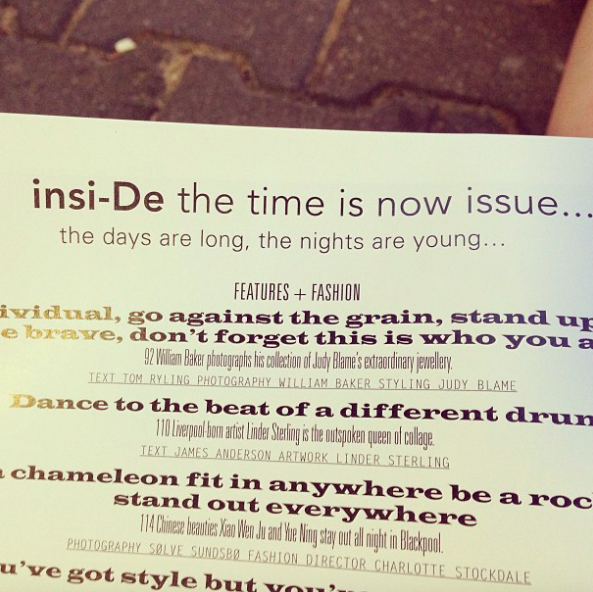
Back in Berlin, this was how it was meant to be.
Ex-pat former lockjaw Americans held parties in erratically furnished apartments. They paid friends who were bar staff by the hour to make cocktails for a group of ten of us. We smoked and snuck out the bathroom window to escape. An English goodbye. We sat on pavements outside schbetes and everyone tutted at my Club Mate obsession while the other English expats bemoaned Brexit.
Everywhere there were signs. The issue of i-D I read, that was called The Time Is Now. The delay for my flight home that meant I had six hours to kill thinking all these things through.
Robert’s intermittent txts back to me.
Ana’s messages beginning once again, after the longest gap in messaging we’d ever had, because instead we’d been next to each other the entire time.
When I got back to London, eight weeks had gone by. It was summer.

Berliner Bike part II
I hadn’t seen Ana in two years, but she met me at the airport dressed as Vivian Ward from Pretty Woman, with a sign for Kit De Luca in her hands.

I hadn’t seen Ana in two years, but she met me at the airport dressed as Vivian Ward from Pretty Woman, with a sign for Kit De Luca in her hands.
And for the first time, for a little while, for an amount of time neither of us had decided on, our days would be the same.
Everything was bigger in Berlin. I brushed my teeth over a sink nearly as big as my kitchen table. The water splattered on my stomach, refreshing skin exasperated by the flight over.
Ana lived here. With huge windows in the flat, high up in the block, that were left open at all hours, those things didn't matter.
We rode bikes everywhere with just one lock between us. You could lock one bike to another as the lock, and that was okay. In the middle of the street even, it didn't matter.
“It's not London, is it?” Ana used to ask me. She hadn’t lived in London for a long time, but she assumed.
We cycled one night to a club lined with foil. We left our bikes on the street and ran inside. We smoked and stood near the fans to cool down. We didn't have to buy any drinks. The DJ came and danced with us in front of his decks between songs. It was that kind of place.
My bike didn't have any breaks or gears, it was a contra bike. Ana found it in the building’s communal basement, and, after years of navigating Oxford Circus at rush hour, I was the only person that could ride it. It was pink and the front wheel got looser as I rode it more. I spent a lot of 3 and 4 am rides through Neukölln praying to the Gods of Cobbled Pavements that the axle would not collapse or snap, that it would get me back to Ana's bed just one more time.
Because there was another reason for going to Berlin (and not crashing a bike in Berlin) beneath spending wonderful, lost hours with Ana as if we were fifteen again and had nowhere else to go.
Because Robert lived in Berlin.
After a few days, I came an inch back to myself and remembered there was another person I knew here.
As if my brain knew, filed right at the back beneath those god awful letters from lawyers and remembering to talk about Nige in the past tense now, that Robert would be a good bet.
I didn’t know Robert well. He was a friend of my sister’s I’d met a few times in Glasgow. He’d moved to Berlin a few months ago.
Back in Glasgow, we’d gotten talking at a house party my sister held. She’d lived in a tenement block and the rooms felt cavernous enough that monopolising one person for a two hour conversation seemed reasonable. Rob lived a few doors down the street and left early in the morning after we’d stayed up all night taking the piss out of everyone else at the party.
The next day I found him on Instagram and realised the sum total of fiercely dark brown hair cut back super short and a job (he loathed) running a pub: it wouldn’t be the worst thing in the world to message him.
My sister rolled her eyes when I told her as if fancying Robert was the most passe thing anyone could do in 2019.
“Oh everyone has that phase babe.”
And to be honest, he was that kind of low-key hot that everyone would. But in Berlin, he barely knew anyone: different rules applied.
It turned out that Robert lived on the same street as Ana which I took as A Sign.
They'd never met, but I felt like somewhere, this coincidence, something would happen from it.
He told me to meet him at our local Ubahn. What a strange reality where we now shared a train stop.
Ana had to draw me a map as I didn't have a clue where I was. I was careful not to make too much effort as I got ready to go while she watched old episodes of Gossip Girl. I realised I had gone in for a second layer of mascara, and Ana pretended not to notice as she kissed my cheek on her front door mat. I hoped she wouldn't also recognise the smell of my expensive perfume.
Rob was three minutes late to the station and when I looked up from my phone I barely recognised him. He had glasses on now, and looked so different. My legs were covered in bruises, from that damn bike. I suddenly realised I probably did not look at all great.
We talked and talked and talked. Just like we had the first time we met. Ana asked me later if we ever ran out of conversation, but we never did. I loved talking to him.
We took the Ubahn to a restaurant in the west of the city that was full, then walked to an empty American themed bar in the centre of the tourist area where they served lurid blue frozen margaritas.
There were only two topics that were considered out of bounds, and that was what I thought about him, and what he thought about me. Perhaps it was in some referential nod to me being his friend’s little sister. We talked about everything else, people we couldn't stand, people we loved, people we admired. I tried to spot if Berlin had changed him.
And I realised, catching his eye as he waited for me by the restaurant doors to leave, and seeing how his face changed when I did, that in another parallel universe with duplicates of us walking around, this would be the start. It would begin right here.
After dinner we went to find Ana. I thought he would leave at the schbete but he bought a bottle of beer and came with us, came and sat with Ana's Berlin friends and drank a Tyskie, smoked a roll up, sang happy birthday to someone neither of us had met.
The best part was that Glasgow felt like a world away, and London even further.
Robert said he wasn't used to being out so late or with so many people. I guessed it was weird for him to have to chaperone me through his new city only to then find a pocket of it down by a canal that I was totally familiar with, strung up with bunting, sparklers, cava, and my new friends.
The morning after seeing Robert I lay with Ana on her bed. She went to make more coffee and find an ashtray while I switched on her laptop. I re-read a draft message to Robert I had written on my phone after getting home the night before. I typed it on to the laptop carefully. It said how nice it was to see him. It was long for Facebook, a whole paragraph. I knew Ana would make me delete it if she saw it so I sent it, wincing with both eyes shut as I did.
Berliner Bike part I
A week after I got fired, I had to put my dog down.

A week after I got fired, I had to put my dog down.
Things were shit, I thought to myself, sat on the top deck of the bus with an empty dog carrier upturned, crying.
And they were on the verge of getting really shit.
My dog, Nige, had spent the last three weeks of his life watching me on the phone, a then Creative Director at the ridiculous age of 24 (as I’ve said before, they never should have given me that role), pleading with the board to let me keep my job.
Nige must have thought I looked fucking pathetic.
In retrospect I’m most upset about that.
Not that stupid job that ended when a well known morning news presenter tried to sue me for defamation that I was guilty of.
Or the fact that the week after I left, that week Nige got put down, was also the week they finally launched that godforsaken IPO, initials I resented even knowing.
I was buying filter tips in the local shop when I saw it on the telly.
My eyes did that weird super-focus thing they can do in real life but rarely do, and I dropped my card in the pile of reduced chocolate bars by the counter.
I was well and truly sick of myself and everything was out of control.
I was sick of my voice and sick of my writing. Sick of those letters from those lawyers and sick of playing back everything I’d said in those boardrooms to try and keep that stupid job.
And Nige might still have been there if I had changed one of those things.

There wasn’t a day in the surrounding weeks I hadn’t cried myself to sleep. I don’t remember how many, they were a tangle of no more 6am starts, no more Nige and no more paydays.
I posted an ironically/un-ironc GIF on Facebook because it felt ‘vintage-me’ and I wanted to see if an ex boyfriend would reply.
It was the start of spring.
And I said things like “I was fucking done” to my friends in the pub (they bought the drinks), like I was ready to draw a line under it, and like I had another bar of energy to use just waiting to plug into me. I feigned having some sort of strategy, and like I would be fine in a few days.
But really, I had no idea what to do, and I could feel something at the edges that wasn’t right.
I could sense that creeping sunset of depression a few days away and I knew things must be bad because it felt inevitable. I knew if it arrived, I wasn’t going to fight it.
That thing where your skin doesn’t fit right on you. And I had only felt that once before, when the depression had really taken hold.
My one saving grace in all of this was that I was able to tell Ana this, word for word.
And Ana told me to get on a flight to Berlin.
Because Ana said I needed a break.
And because I had no way of arguing back to her and certainly no one or thing to look after any more in London, I did what she told me to do.
I packed all my favourite clothes into a suitcase with no wheels and caught a flight that didn't come back.
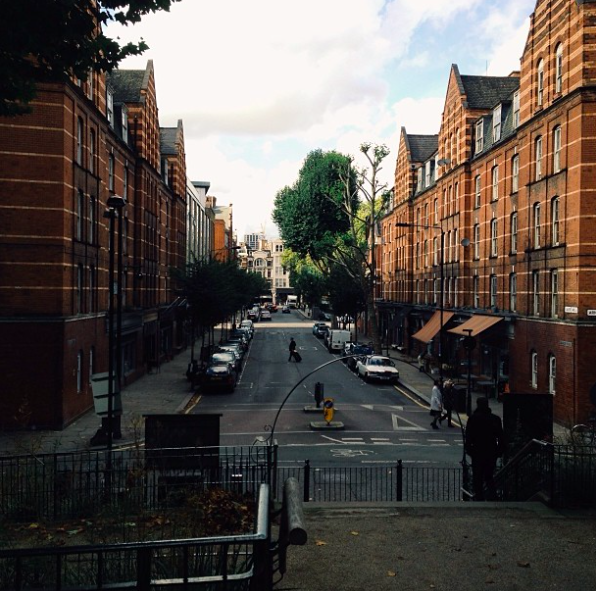
A Love Letter To A Best Friend
I’ve left a lot of best friends and home towns. I’ve closed a lot of bedroom doors for the final time, their contents long shipped off to a new four walls. But I’ve never cried before leaving. I don’t know if I’ve ever cried more in front of anyone.
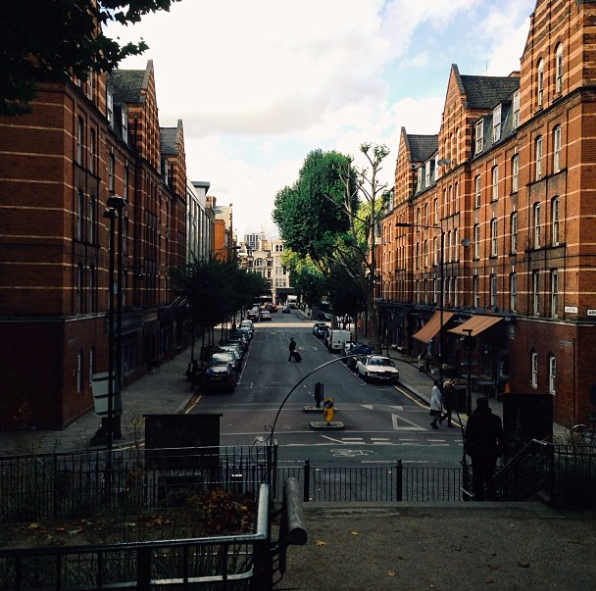
... and then she moved to bloody Berlin! Anyway, this is about my best friend and that kind of love, even when you live together. Because you live together, in fact.
I’ve left a lot of best friends and home towns. I’ve closed a lot of bedroom doors for the final time, their contents long shipped off to a new four walls. But I’ve never cried before leaving. I don’t know if I’ve ever cried more in front of anyone.
It was obvious for a long time that we’d be going our separate ways. I wanted to move to the East, Ana wanted to stay South, Kieran wanted to move North and I don't think Charlie wanted to live with any of us. Ana had said we could look for somewhere all together, back in February, but things had changed since then.
Since then we turned 21, handed in dissertations, got jobs in call centres and started paying council tax. None of us had really talked about it and then suddenly move out day came around and Charlie was sat in the front garden on the three piece suite we were giving up to the council, his shirt tied round his head in the July heat, swigging on a bottle of Lucazade.
Three days before, we’d held our final party. All of our furniture had been emptied out and we filled that decrepit old house full of friends and alcohol. The 82-pages of A4 depicting a moon landing still hung up on the wall in the living room, cotton wool doused in peppermint to ward off rats still stuffed every crevice in the staircase, a string of lights from a hazy Halloween party remained crammed down the side of the sofa.
We didn’t need to live with each other anymore. I hated that part of town and no-one liked my favourite part. They liked the abandoned industrial parks and pool halls of Peckham, I liked the 24 hour bagel shops and warehouse parties of Hackney. I thought it was as simple as that, and finally, somehow, every room was empty, every surface cleaned for the first and last time that year.
The tears began at four in the afternoon. By five my eyes were swollen and the skin around them shot with burst blood vessels. I was furious that night she left; I spent two hours peeling melted candle wax from the walls of her bedroom, trying to stuff her abandoned duvet into a bin bag and hovering up the spare change left scattered on her floor. But I cried and cried.
When you live with someone you get to see their glorious day-to-days. The way they make their first cup of tea after a long shift. Abandoned cereal bowls left on the front door mat, contact lense paraphernalia, greying washing, various different types of soy milk, bags of abandoned spinach gone gloopy. Drunken munchies, pajamas at lunchtime. And day to day you probably hate all that stuff. But when you say goodbye to it, if that friend was true, you’ll miss it with a dull, aching pain that stays through the years. Keeping friends after you’ve lived with them is a rare, precious form of alchemy, but I miss Ana every day.
Not To Intervene When It Came To You
It's late in the morning, half nine, ten maybe, and the sun has forced its way through the half-closed shutters. There's a beam of it on my face, which feels tight from the heat yesterday, and the drinking, and the salty food, and I suppose the dusty city streets of Barcelona. But this isn't what wakes me.

For a few months a few years ago, I did a lot of writing around happiness and what that means in these times. This is the personal account I put together, to inform the other writing. For the record, I truly believe it was Nick Cave playing that morning, and it was one of the happiest moments of my life.
It's late in the morning, half nine, ten maybe, and the sun has forced its way through the half-closed shutters. There's a beam of it on my face, which feels tight from the heat yesterday, and the drinking, and the salty food, and I suppose the dusty city streets of Barcelona. But this isn't what wakes me.
Somewhere vaguely outside and above us, I hear a keyboard playing, someone's dulcet tones singing in a familiar cadence, a pattern of crochets and quavers I know in my heart. It's a Nick Cave song, Into My Arms, and I realise with a deep, resounding tidal wave that it's Nick Cave Day at Primavera: we see him tonight.
I am barely awake but for this sunlight, the cool parquet floor of our budget hostel room and this music. The notes are just barely audible over the morning door slams and traffic of our back street alley. So quiet I know for sure I must be the only other person hearing this, and I never want it to end.
I have no headache from all the Sambucca yesterday. No hunger despite never quite tracking down somewhere to eat anything, in fact no urge for anything. Just to be there, listening. It's someone playing as well as Nick Cave, singing as gorgeously as him, and in those moments it just is him. Why not, I tell myself. Why not. I realise despite the awful flight times home tomorrow, the lack of any normal comfort, the heat stroke and whatever else, today, right now, I am truly happy.
Eventually the music stops. I can't remember if the song ended or if the sound faded away. At breakfast an hour later on our hostel room floor, I try to explain to my friends how much it really was Nick Cave singing this morning, that his voice woke me, that it was the most beautiful morning of my life.
They laugh into their microwaved lattes we've assembled from corner shop supplies and continue to chop fruit.
Find Your Groove And Savour It, A Meditation on Happiness
Here's the thing: we've been oversold on happiness. It isn't everything, it shouldn't be your be-all-and-end-all, and when it stops being that, a general state of fair-to-middling contentment becomes far easier to locate.

A few years ago I was asked by a magazine to write about happiness. This is one side to two pieces of writing I created around the idea. This piece was never published, but it pushed me to pitch and write and pitch and write. And writing makes me the happiest of all things, so, in the end, I'm really fond of this piece.
-
"The small rituals of life- the drinking of tea and the eating of cake-are really big things in disguise.”
Alexander McCall Smith writing for The Observer, 2006
I've had this quote taped to every diary I've used since I was seventeen. It's from an article written years ago about the pleasure of small rituals, daily life and I think in the background, the kind of happiness worth realising is all about us.
Here's the thing: we've been oversold on happiness. It isn't everything, it shouldn't be your be-all-and-end-all, and when it stops being that, a general state of fair-to-middling contentment becomes far easier to locate.
Travel back just one hundred years and happiness still had the connotations of luck, good fortune and being blessed that has been written about since ancient Greece. But with the gradual rise of modernism and a secular, highly individualised culture, came the appropriation of happiness. In its current state, happiness is perceived as something within our control, a place we need to reach, a journey where we can pave the way.
Essentially, why pray for something when you can buy it at the local store? Long gone is the time when we left these things to forces of chance, religion or nature. Now we're supposed to be able to locate it within ourselves. I don’t think that’s necessarily a bad thing, it’s just something that is getting needlessly obscured. But if you recognise the things that bring contentment, joy and satisfaction to your life, happiness is likely to be found mingled in-between.
How will you know? Well, for starters, if you’re lucky enough to have time to care, you probably have the tools available to be happy. It doesn’t have to be about life goals or five year plans. In fact, the individualised ‘agentic’ views of happiness can be really simple. It can be about sitting still and being okay there. Break away from all those feelings of unattainable targets and FOMO (thanks, social media) and it’s easy to see happiness is simply about not really needing anything at that moment in time.
It does not mean success, it does not mean popularity, it does not mean notoriety or fame, or being recognised for doing anything. It means you are able to take a good look at your lot in life and be pleased. It means when you finally get into bed each night, you're able to be thankful for a bunch of stuff. We've already spent too long exchanging words like 'fulfilment' and 'satisfaction' for 'happiness'- and the difference isn't just semantic. By placing so much on an idea that's so hard to pin down, we're just making things more difficult for ourselves. Happiness in its nature is fleeting: one day it's all-consuming, the next day gone in a breath. But building a life around achievements, relationships, contentment - that's got to be a better place to set down foundations for how you will construct your days.
Better than being on some badly sign-posted road to nowhere. Because there is no trajectory or journey. The only thing that does change over time is wising up to what it is that makes you happy, and making sure those things, whether they're people, the right city, the right philosophy or the right way to spend your day feature as often as possible. Forget bucket lists and anything else that takes the focus away from reality, because happiness isn't something taking place ten years from now, and it's not going to arrive with your first pay check at your dream job. It needs to happen today.
We grow old and everyone around us dies. And that's if we're lucky enough to grow old. The point is to find your little groove and savour it. Learn to live with your life, live it well, consciously teach yourself to enjoy the experience, and there will be happiness.
You Like Music We Can Dance To
I was 29 and needed glasses for the first time and had to stop eating anything sweet at all because it hurt too much and I suddenly realised I was at that peak age maybe day or month where everything was the best it could be and the deterioration was beginning.

I was 29 and needed glasses for the first time and had to stop eating anything sweet at all because it hurt too much and I suddenly realised I was at that peak age maybe day or month where everything was the best it could be and the deterioration was beginning.
Like the summer solstice that comes so soon; I always maintained I'd come of age at 45 in some glorious Nigella Lawson-esq manner and was holding off until then. But really, it would be all downhill from here.
The hangovers that used to be fine excuses to do nothing but now filled me with dread, realising all of those hours that go to waste just to feel a bit like Better Me for an evening.
I explained to my Mum that I made a new girl gang during the press trip and how great it was they found me funny.
I said I thought maybe my usual friends were already funny and I hadn't realised.
"All your friends *are* funny" my Mum replied.
"No I don't mean funny-strange I mean funny-haha and all *your* friends are funny-strange by the way."
I didn't want to tell her that I was lucky to have the friends I did have left because everyone you once cared for has left London by the time you're 29.
That it had become one city-wide game of musical chairs, for the good jobs and the good partners. Apart from I crucially wanted to stay nice and leave one day - a deal London wasnt going to sign off on easily.
Fleeing friends are just one part of that bargain.
The rest is wondering if your hair used to fall out at this rate five years ago while you stand in someone's armpit on the Victoria line home for the night, too tired to go for those drinks that were arranged three weeks ago.
They’ll get re-arranged, pushed back in the diary, like the escape plan you once had for Glasgow and Manchester and Margate and Anywhere But Here, or - worse: back to the place you left at 18 that somehow feels welcoming again.
I used to think someone would come and tell me I had made the right decision with it all.
Then one summer’s day I realised I could still count how many babies I’d held in my 20s (four) and that my time on this unfathomably long business trip was coming to an end.
There was an end in sight, at least.
What did get used up in those eight intervening years to make those night buses and strip-light-lit bagel shops and club toilet cubicles suddenly unappealing?
What’ll get used up in the next eight?
And dear god how crazy will the countryside make us or is it okay now we’re old?
Don't Big It Up, A Story About Losing Someone
I was sat in the back of maths, our last lesson of the school year, with my best friend, Tracey, and a heavily amended list of names shoved beneath my exercise book.

I have changed the names of people mentioned in this piece.
I was sat in the back of maths, our last lesson of the school year, with my best friend, Tracey, and a heavily amended list of names shoved beneath my exercise book.
"Just- don't big it up."
I rocked back on my chair and handed Tracey the guest list to a party at my house that night. "I told my neighbours I'm having a girls' sleepover. So no more than three cars in the drive, and we're going to need a staggered entry."
Tracey glanced down the list and smiled at all the crossings out and '+1' additions.
"I'm on it," she said, folding the paper in half and half again.
"I'm on it, trust me. But I'm bigging it up, okay?"
That summer was the best. Unbeaten. We filled July and August with fierce fun. We were all fifteen, and something had turned for the better; plans fell into place and parties took hold.
We climbed on walls and through living room windows and listened to the same Motown album over and over again. We stained kitchens with sangria and hallways with river water. I spent all my wages as a waitress on haircuts and dresses from charity shops I cut too short.
I was nowhere near happy or content, but veered on greedy and demanding and along for every ride. I wanted to be at every party, every sleepover, every telephone call, and it felt like if you missed one weekend you wouldn't know where to find anyone the next.
At its core there were 12 of us. My brother was only two years younger than me, so our house became Designated Party House, and to my delight, it was every Friday night.
We would open up all the doors on the ground floor to become a large-scale oval we would run around, looping and looping. We would lock people in the airing cupboard, friends arriving with last Christmas' Malibu their mums wouldn't miss, other friends going missing for mysteriously long periods of time, endless playlists enabling Karen O to shout simultaneously from every room. There were futile attempts at punch and cocktails on the lawn, lip gloss maintenance, stubbing cigarettes out on the trampoline, duvets stained forever more in mud and Tango. All of us, together - the same faces, different outfits, new combinations, but always in search of more.
Somewhere at the centre of the gang was Theo.
Theo was my first guy friend. One day I barely knew him. The next, we had made fun of each other for a solid 18 hour coach ride to Belgium on a school trip. By the time we were back in England, we'd organised a party for the next day and rearranged our chairs in History so we could sit next to each other.
At first shy, he became one of the most caring, quietly funny guys I've ever known. I cherished this new type of friendship that felt so different from the others. I did not try to manipulate the time we spent together - neither of us were invested in it because we fancied each other. We just liked being around each other. If he was in a room, I’d want to be next to him. Without knowing specifically what that was, back then, it was the first time I had felt that endless love of a platonic friendship.
He didn’t put up with my shit. He got angry when I bitched too much, and sad when I wouldn’t tell him what was wrong. I had only known him a few months when I realised his approval was one of the only ones I sought out within our crowd.
Because never once in that summer were we satisfied. There was always a bigger party to have in secret, new friends to invite, and a new off license that apparently didn't ID. We would stay up all night. Endless energy from I don’t know where. By dawn the next day we would plan another one. We were always working on next Friday’s line-up. As summer went on, more and more people were added to that endless guest list. The plus-ones became plus-fours and I stopped caring what the neighbours thought.
Some time amidst all of this, Theo started going out with Alex, a girl we knew from another school. It started out as an MSN convo thing. Which is to say, he told me they talked online, when it sort of didn't count as proper talking, so I didn't give it much thought. Everyone was going out with everyone else: joke dates and Pizza Hut buffet dates and cinema dates with Theo and me having popcorn fights in the fire exit. No-one took anything seriously, everyone was getting their heart broken every week. But I know, looking back, even with just a few year's more experience, I would have been able to spot some warning signs.
Instead we played hide and seek in the wood and then made a make-shift barbeque to cook sausages and plastic cheese. We got sunburnt and buried bottles of WKD we'd found outside a petrol station. We thought we saw a puma in a forest. The photos I have are of us hugging and running and playing chopsticks on the piano and some guy's bum.
Miraculously, even after all of those Friday nights, nothing had been ruined. Only a cracked avocado green toilet seat my parents couldn't stand the colour of anyway would betray that endless summer once August slipped into September.
Because without much warning, we were in school again. And it was more fun than ever now the weekends had to be jammed full with every party we could think of. Theo and I sat next to each other in all the classes we could. The group that had felt so in-flux when we started the summer was now cemented in months of phone calls, GCSE subject changes to be near each other and mix tapes. The broken tent, gig ticket stubs and bottles of empty vodka wrapped in socks (to stop them clinking) beneath my bed were relics and souvenirs of what would become the best summer of my life.
The heat, that infectious excitement, it passed like wildfire and didn’t finish until Theo's birthday, the fifth of November. All 22 of us took up half of a restaurant to celebrate his 16th. We ordered the house wine, threw bread sticks at each other and paid in pocket money. At that time Theo never took off his cap, and I can still remember his trademark curls hidden under a baseball cap from the other end of the table.
I didn't get to speak to Theo very much that night. I knew he was sad, I knew he wasn't having the best of times, but I remember thinking, if I can't speak to him because he's surrounded by people that care for him, he can't be lonely. It could only be a good thing to have so much company. He must see he is loved.
And then ten days after that night, he was gone.
Theo’s decision, whether it was final or a call to arms to those around him, I will never know, and I will never understand.
It was ten past nine on a freezing grey November morning when my form teacher told me someone called Theodore had died. I flashed through my best friends. It was okay - I didn't know anyone called Theodore. But of course, she meant Theo. And I knew, right then and there, in a way you can only know when it is absolutely final, that it was suicide, and that it was over.
While we had all been playing at being drunk, being messed up and being heartbroken, Theo had felt it more keenly than any of us could realise, and in a way we could never fix. Back then, we assumed it was the array of things we knew about. But really, I have no idea. If Theo's death taught me one thing, it's that each person you know has a world of struggles within them, and blaming one person or one catalyst isn't fair on their memory or the years of experience they did manage to amass. It hurts, ever so much, to admit that even as my best friend, I still have no clue what Theo was going through, but it's also the truth. And the only way to do his memory justice.
All of a sudden we had to stop playing.
I ran around school trying to find my brother. No one wanted to go home to their empty houses, but no one wanted to be in the god-awful darkened classroom we were given to cry in. After all the bereavement therapy and assemblies, our group when it was united just reminded me of the one person that wasn't there, and all the reasons why.
The weeks that followed now blur into one long endless stretch of sugary teas, running the shower to disguise more crying every day and sleeping with the light on every night for a year. I did not want that darkness.
I have almost no recollection of the next few months. Where summer remains vivid, coloured with sangria and grass stains, that winter melds into one long sadness, with few things to punctuate the time after Theo.
I do know that instead of guest lists, I came home with the funeral order of ceremony. I handed it to my Mum. She was in tears at the kitchen table so I hugged her. It was the first time since Theo died I'd seen her cry.
All she said was "It's just such a waste".
When we went back to lessons, an empty seat waited for me in History where Theo would never be again. I stood in the doorway to the classroom, determined not to cry before I dealt with one of the final, natural reminders of the friendship Theo gave me. Seeing me in the doorway, my tears, my friends tried to rearrange the chairs so I'd be sat in the middle, but there was still an empty seat. I truly try to think about Theo more than that empty chair and everything he left behind, but it gets harder every year.
In a way none of us tried to stop, we never recovered from that loss as friends. I was never again as careless or hungry for fun as I was that summer. As a group obsessed with endless silliness and play and nothing getting too serious, the connotations had grown too strong: hanging out and having fun with those same people never felt right again. Instead, we drifted back to the groups we had started in, now nearly a year before.
That was almost ten years ago.
Unlike many of the friends I made that year, I never lost touch with Theo. We never fell out, my perception of him never changed. Our friendship never grew up, I never got too frivolous for him, he never got too serious for me. He never told my secrets, never left without me, never forgot to drive me home.
I try to think of him every day. I try to not think of those empty spaces and instead think of the full ones. I don’t make friends so fast, I don’t have so many. I cherish every friend I made that summer, and it’s an absolute life joy to have made it to their weddings, to see them have children, to see their faces begin to age, to see them meet new people we never added to guest lists.
I wish I could have shown Theo that back then. I wish with all my heart he could be here for different times. Times he could have had any haircut he liked. Harder years he could have grown out of. Better years to sink into.
And some days I forget to remember Theo. But I think he would have been okay with that by now.
If he is still out there somewhere, I don’t know whether to think of him as nearly 31 or barely 16. But I think we would have been friends still.
CREATIVE WRITING
✶
Blog posts, short fiction and personal essays.
✶
Latest POSTS
In June I was asked by Rich Mix to put together a list of resources staff and the public could use to aid discussion and activism around dismantling racism in the UK.